Custom Bathroom Vanity Factory Top Supplier
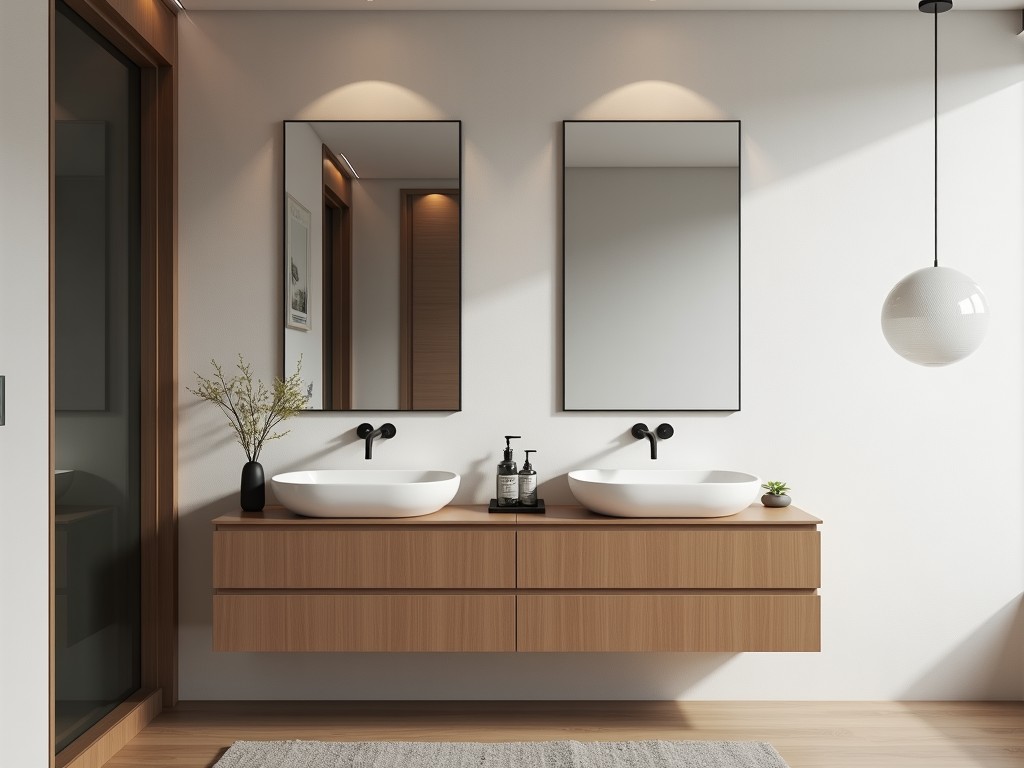
Custom Bathroom Vanity Factory Top Supplier
Selecting a factory supplier for custom bathroom vanities requires evaluating production capabilities, material handling precision, and design-to-manufacturing workflow integration. Industrial buyers
- Category:
- Bathroom Cabinet
Custom Bathroom Vanity Factory Top Supplier
Selecting a factory supplier for custom bathroom vanities requires evaluating production capabilities, material handling precision, and design-to-manufacturing workflow integration. Industrial buyers prioritize suppliers who can translate architectural specifications into repeatable, defect-minimized production runs while maintaining tight tolerances on joinery, finish adhesion, and hardware alignment.
This page details the technical considerations involved in sourcing custom bathroom vanities at scale, focusing on factory processes that directly impact product longevity, installation efficiency, and lifecycle cost. Understanding these factors enables procurement teams to assess supplier suitability beyond surface-level aesthetics.
The following sections outline material selection logic, dimensional control methods, finish system engineering, and quality validation protocols used by leading manufacturers to meet commercial and residential project demands.
Material Selection and Substrate Engineering
The substrate forms the structural foundation of a bathroom vanity, directly influencing moisture resistance, screw holding strength, and long-term dimensional stability under cyclic humidity exposure. Common engineered options include moisture-resistant MDF (MR-MDF), plywood with phenolic glue lines, and particleboard with wax-emulsion treatment, each selected based on project-specific environmental classifications.
MR-MDF typically exhibits a thickness swell rate below 5% after 24-hour water immersion per EN 317, making it suitable for bathroom zones with indirect moisture exposure. Plywood cores, particularly those with 5-ply or greater construction and exterior-grade adhesives, offer superior screw withdrawal resistance (>1200 N face, >800 N edge) and are preferred for wall-mounted units requiring high load-bearing capacity.
Surface laminates or veneers are bonded using hot-press or vacuum-press systems with adhesive spread rates controlled to 120–160 g/m² to prevent telegraphing or delamination. Edge sealing is critical—PPR (polypropylene rubber) or laser-edged PVC bands with overlap welds provide moisture barriers achieving >90% edge protection efficiency compared to unsealed counterparts.
Dimensional Control and Joinery Precision
Dimensional accuracy in cabinet carcasses affects door gap consistency, drawer alignment, and countertop support integrity. Leading factories employ CNC nesting routers with positioning repeatability within ±0.1 mm and laser-guided drilling systems for hinge and fastener hole placement, reducing cumulative tolerance stack-up in multi-component assemblies.
Joinery methods are selected based on load path and service life requirements. Cam-lock fasteners with steel reinforcement inserts provide tensile strength exceeding 800 N for shelf-to-side panel connections, while dowel-and-glue joints using PVAc dispersion adhesives achieve shear strength of 1.8–2.2 MPa after 7-day cure, suitable for door frames and drawer boxes.
Drawer systems utilize undermount soft-close slides with dynamic load ratings of 30–40 kg and lateral stability tested to 10,000 cycles. Slide mounting hole placement is held to ±0.2 mm tolerance to prevent binding or premature wear, with factory validation using gauge block inspection and functional travel mapping.
Finish System Engineering and Curing Protocols
The finish system must resist staining, chemical exposure from cleaning agents, and micro-scratching during daily use while maintaining adhesion to the substrate under thermal cycling. Two primary approaches are used: UV-cured polyurethane coatings and catalyzed conversion varnishes, each with distinct curing kinetics and performance profiles.
UV-cured finishes achieve full cure in seconds under 365–405 nm wavelength exposure, resulting in cross-link density exceeding 85% and surface hardness of 2H–3H pencil grade. This method enables immediate handling and stacking, reducing work-in-progress inventory by up to 40% compared to thermally cured systems.
Catalyzed varnishes, typically acid-cured or polyester-based, require 24–72 hours at 20–25°C and 40–60% RH for full cure, developing film thickness of 35–50 μm dry. These systems offer superior edge penetration and are often selected for high-gloss or textured finishes where coating uniformity is critical. Adhesion is validated via cross-hatch test (ASTM D3359) with minimum rating of 4B.
Finish thickness is monitored using non-contact ultrasonic gauges with repeatability of ±1 μm. Coefficient of friction (COF) is maintained between 0.4–0.6 for dry sliding contact to balance wipe-clean ability and slip resistance, measured per ASTM D1894.
Quality Control and Validation Workflow
Quality assurance begins at incoming material inspection, where substrate moisture content is verified using capacitance meters (target: 4–8% for MDF, 6–10% for plywood) and adhesive spread rates are checked via gravimetric sampling. In-process checks include dimension verification after pressing, pre-finish sanding roughness (Ra ≤ 1.8 μm), and edge seal continuity using ultraviolet fluorescence testing.
Final assembly validation includes door gap uniformity (target: 2.0 ±0.5 mm), drawer front reveal consistency (±0.3 mm), and hardware torque auditing (hinge screws: 1.8–2.2 Nm; drawer slide fasteners: 1.2–1.5 Nm). Function testing cycles doors 50 times and drawers 100 times under load to detect misalignment or binding.
Packaging inspection confirms corner protection using 6mm polyethylene foam, edge guards with 10mm crush resistance, and interior separation via die-cut corrugated dividers. Drop testing follows ISTA 1A protocol with six-sided drops from 760mm height, accepting zero visible damage or functional impairment.
Typical Specifications and Customization Parameters
| Parameter | Typical Range / Options | Notes |
|---|---|---|
| Cabinet Height | 700–900 mm | Includes toe kick; ADA-compliant options available |
| Cabinet Depth | 450–600 mm | Standard: 560mm; shallow-depth for tight spaces |
| Door Overlay | Full, half, inset | Affects gap reveal and hinge type selection |
| Drawer Box Material | Solid wood, plywood, MDF | Bottom panel typically 3mm HDF or plywood |
| Finish Sheen | Matte (10–20 GU), satin (30–40 GU), semi-gloss (50–60 GU), gloss (70+ GU) | Measured at 60° glossmeter per ASTM D523 |
| Hardware Type | Soft-close hinges, undermount slides, push-to-open | Load ratings and cycle life specified per DIN EN 15570 |
For project-specific requirements not covered in standard ranges—such as non-standard angles, integrated lighting channels, or antimicrobial surface treatments—factories engage in design-for-manufacturability (DFM) reviews. These evaluations assess tooling needs, sequence optimization, and potential failure modes before tooling release.
Lead times are influenced by material availability, finish complexity, and volume. Typical production cycles range from 15–25 working days for standard configurations, extending to 30–40 days for custom finishes or hardware sourcing. Expedited options are available with prior capacity confirmation.
Sample requests require submission of detailed drawings, material specifications, and finish references. Physical samples are produced using identical processes as full production to ensure representativeness, including substrate preparation, joinery, and finish application.



