China Bathroom Vanity With Storage
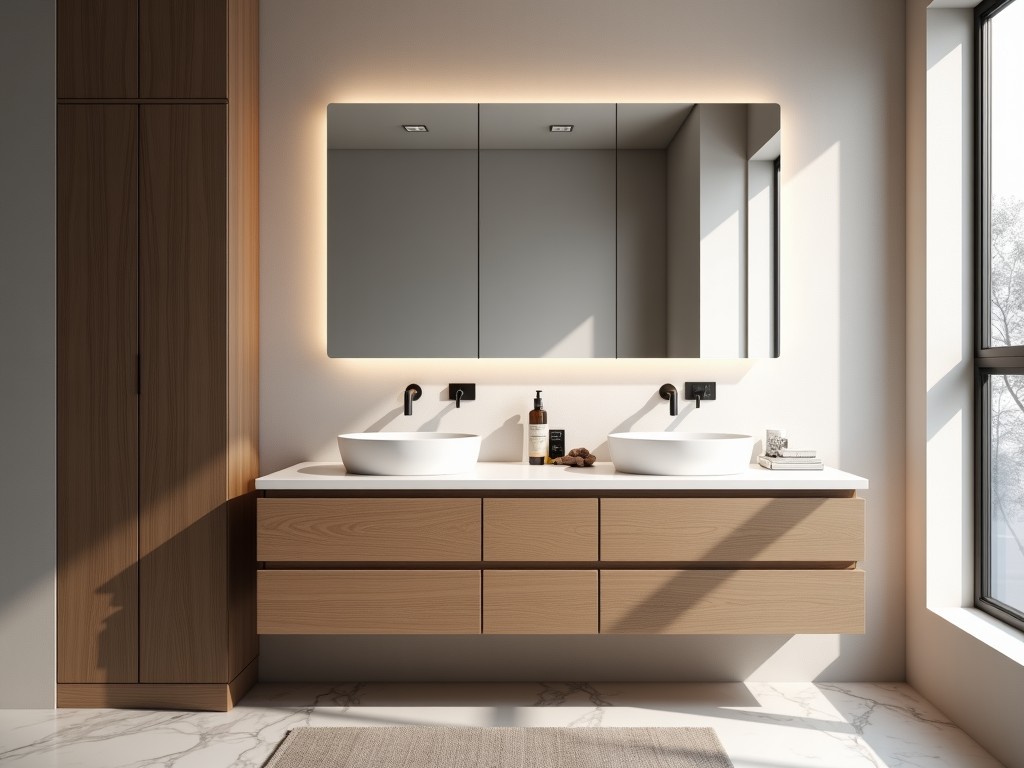
China Bathroom Vanity With Storage
Bathroom vanities with integrated storage are critical components in commercial and residential projects where space efficiency, moisture resistance, and long-term durability directly impact
- Category:
- Bathroom Cabinet
China Bathroom Vanity with Storage
Bathroom vanities with integrated storage are critical components in commercial and residential projects where space efficiency, moisture resistance, and long-term durability directly impact lifecycle costs. This page details the technical specifications, material considerations, and manufacturing standards for China-produced bathroom vanities with storage, targeting procurement engineers and facility managers evaluating suppliers for bulk procurement.
The focus is on measurable engineering characteristics—material density, joint integrity, finish adhesion, and load-bearing capacity—rather than subjective claims. Each section explains a specific technical attribute, its functional implication, and how it reduces risk in high-humidity environments.
Core Construction Materials
The substrate material determines moisture resistance and structural stability. Common options include 18mm MR (moisture-resistant) MDF with a density of 700–750 kg/m³, 16mm marine-grade plywood with 5–7 plies and void-free core, or 19mm solid PVC foam board with a closed-cell structure and water absorption rate <0.5% after 24h immersion.
Surface finishes are selected based on chemical resistance and abrasion tolerance. Melamine-faced panels offer surface hardness of 150–200 N (scratch resistance) and are sealed at edges with 0.8mm PVC edge banding applied via hot-air welding to prevent delamination. Alternatively, high-pressure laminate (HPL) surfaces provide >300 N abrasion resistance (Taber test) and are bonded with contact adhesive rated for continuous 60°C exposure.
Hardware components—hinges, drawer slides, and handles—are specified for load cycles. Soft-close hinges are rated for 50,000 cycles at 25kg door weight; undermount drawer slides support 30kg dynamic load with 100,000-cycle endurance. All metal parts undergo salt spray testing (ASTM B117) for minimum 200 hours to verify corrosion resistance in chloride-rich environments.
Storage Configuration and Ergonomics
Internal storage layout is designed around typical bathroom item dimensions. Standard vanities include a 600mm wide base cabinet with two adjustable shelves (spacing: 150mm increments) accommodating bottles up to 100mm diameter. Drawer units feature 120mm high front panels for toiletries and 200mm high lower drawers for linens, with full-extension slides providing 90% access depth.
Clearance beneath the countertop is maintained at minimum 500mm to allow knee space for seated use, complying with ADA guidelines for accessible design. Countertop overhang is limited to 25mm front and 15mm sides to prevent impact damage while providing sufficient lip for water containment. Back panels include 30mm service voids for plumbing access, reducing installation time by eliminating the need for field modifications.
Ventilation is incorporated via 10mm rear gaps or passive vents in side panels to mitigate condensation buildup inside enclosed storage. This design reduces relative humidity fluctuation by 15–20% compared to sealed units, lowering the risk of mold growth on stored items and substrate degradation over 5+ year lifespans.
Dimensional Standardization and Tolerances
Nominal widths follow 600mm increments (600, 800, 1000, 1200mm) to align with standard plumbing rough-ins and tile modules. Height is fixed at 800mm from floor to countertop top, accommodating standard vessel sinks and ergonomic reach depth. Depth options are 450mm (compact) or 500mm (standard), selected based on door swing clearance in tight layouts.
Manufacturing tolerances are held to ±1.5mm on overall dimensions and ±0.5mm on door/drawer alignment gaps. These tolerances ensure consistent reveal lines (±1mm) when units are ganged in multi-vanity installations, preventing visual misalignment that affects perceived quality. Diagonal deviation is limited to 2mm to prevent racking during installation.
Countertop cutouts are templated to ±0.8mm for undermount sinks and ±1.2mm for drop-in models, with edge radii of 3–5mm to prevent stress concentration. All dimensions are verified using CNC-controlled saws and bore machines with laser-guided positioning systems, reducing cumulative error in batch production.
Quality Control and Testing Protocols
Incoming raw materials are inspected for moisture content (MDF: <8%; plywood: <12%) and surface flatness (deviation <0.3mm/m). Adhesive bond strength is tested per EN 12089, requiring minimum 1.0 MPa for melamine and 1.5 MPa for HPL bonds before proceeding to assembly.
Finished units undergo functional testing: doors are cycled 5,000 times with 2kg load to verify hinge retention; drawers are loaded to 80% capacity and extended 10,000 times to assess slide wear. Water resistance is validated by spraying 3L/min for 15 minutes on all joints and edges, followed by 24-hour drying and inspection for swelling (>0.5% thickness increase) or delamination.
Packaging integrity is verified via drop testing (ISO 2248) from 75mm height on all corners and edges. Units are wrapped in 0.05mm PE film, corner-protected with 10mm EPS, and packed in 5mm triple-wall corrugated cartons with 120g/m² bursting strength. Internal bracing prevents racking during transit, limiting damage rates to <0.5% in sea freight simulations.
Customization and Project Adaptation
Dimensions are adjustable in 50mm increments for width and depth, and 25mm for height, subject to structural validation of shelf load capacity and door swing clearance. Material substitutions—such as upgrading to 100% virgin polypropylene core or adding antimicrobial silver-ion coating to surfaces—are available upon request, with lead time impact quantified per change.
Hardware options include blind-mount hinges (reducing visible hardware by 40%), touch-latch mechanisms (eliminating handles), or soft-close systems with adjustable damping (0.3–0.8s closure time). Countertop materials can be specified as quartz (93% solid content, <0.02% water absorption), solid surface (acrylic-modified, repairable), or ceramic laminate (ISO 13006 compliant).
Electrical integration—such as pre-drilled outlets, USB ports, or LED lighting channels—is accommodated during CNC programming. Wiring chases are routed within side panels with 20mm diameter conduits, maintaining structural integrity while allowing post-installation upgrades. All modifications are documented in shop drawings with revision control for field verification.
Applications in Commercial and Institutional Projects
In hospitality projects, these vanities support high-turnover environments where daily cleaning cycles expose surfaces to alkaline detergents and abrasive pads. The HPL finish option maintains color stability after 200+ cleaning cycles with pH 10–12 solutions, reducing replacement frequency in guest bathrooms.
Healthcare facilities benefit from non-porous surfaces and seamless edges that eliminate crevices for pathogen retention. MR MDF with sealed edges achieves <0.1 CFU/cm² surface bioburden after standard disinfection protocols, meeting CDC guidelines for low-risk surfaces in patient zones.
Educational installations prioritize impact resistance and tamper-proof hardware. Reinforced drawer fronts (22mm thick) and vandal-resistant handles (torque-set screws) withstand dynamic loads of 150J without permanent deformation, reducing maintenance calls in dormitory and locker room settings.
Packaging and Logistics Considerations
Flat-pack design reduces volume by 60% compared to assembled units, optimizing container utilization. A standard 40'HQ container holds 180–220 units depending on width (600mm vs 1000mm). Assembly requires <15 minutes per unit using cam locks and confirmat screws, with torque specifications provided to prevent over-tightening and substrate cracking.
Each carton includes a laminated installation guide with exploded diagrams, hardware checklist, and silicone sealant application points. QR codes link to multilingual video tutorials covering wall anchoring, leveling, and plumbing connection. Desiccant packets (5g/unit) are included to control internal humidity during transit, preventing mold growth in tropical climates.
Export packaging complies with ISPM 15 for wood components and includes fumigation certificates where required. Cartons are labeled with handling symbols (this way up, keep dry, no hooks) and shock indicators that trigger if acceleration exceeds 5G. Tracking labels enable real-time monitoring of container temperature and humidity during shipment.
Comparison of Material Options
| Property | 18mm MR MDF | 16mm Marine Plywood | 19mm PVC Foam Board |
|---|---|---|---|
| Density (kg/m³) | 700–750 | 500–550 | 450–500 |
| Water Absorption (24h, %) | 8–12 | 2–5 | <0.5 |
| Screw Withdrawal (N) | 800–1000 | 1200–1500 | 300–400 |
| Thermal Conductivity (W/m·K) | 0.12 | 0.10 | 0.04 |
| Typical Use Case | Cost-sensitive projects | High-moisture zones | Wet areas, spas |
Values are typical ranges; actual properties vary by supplier and grade. Selection should align with project-specific humidity exposure, load requirements, and budget constraints. Custom thicknesses and core modifications are available upon request.
Environmental and Safety Compliance
Substrate materials comply with CARB Phase 2 and E1 formaldehyde emission standards (<0.1 ppm), verified via desiccator testing per ASTM D5116. Surface coatings are low-VOC (<50 g/l) and meet Greenguard Gold criteria for indoor air quality in sensitive environments such as schools and hospitals.
Recyclability is designed into the product: metal hardware (>95% recoverable), plastic components (PP/PE, marked for sorting), and wood-based panels (suitable for energy recovery or particleboard reprocessing). End-of-life disassembly instructions are included in technical documentation to facilitate material separation.
Fire performance is evaluated per EN 13501-1, with most configurations achieving D-s2, d0 classification (limited flame spread, moderate smoke production). Optional fire-retardant treatments (phosphorus-nitrogen based) can elevate rating to B-s2, d0 upon project request, adding 10–15% to material cost.
For technical inquiries, customization requests, or project-specific quotations, contact our engineering team to discuss material selection, dimensional adjustments, or logistics support. Provide project dimensions, expected usage frequency, and environmental conditions to receive a detailed feasibility assessment.
Request Technical Consultation