China Bathroom Vanity Manufacturer
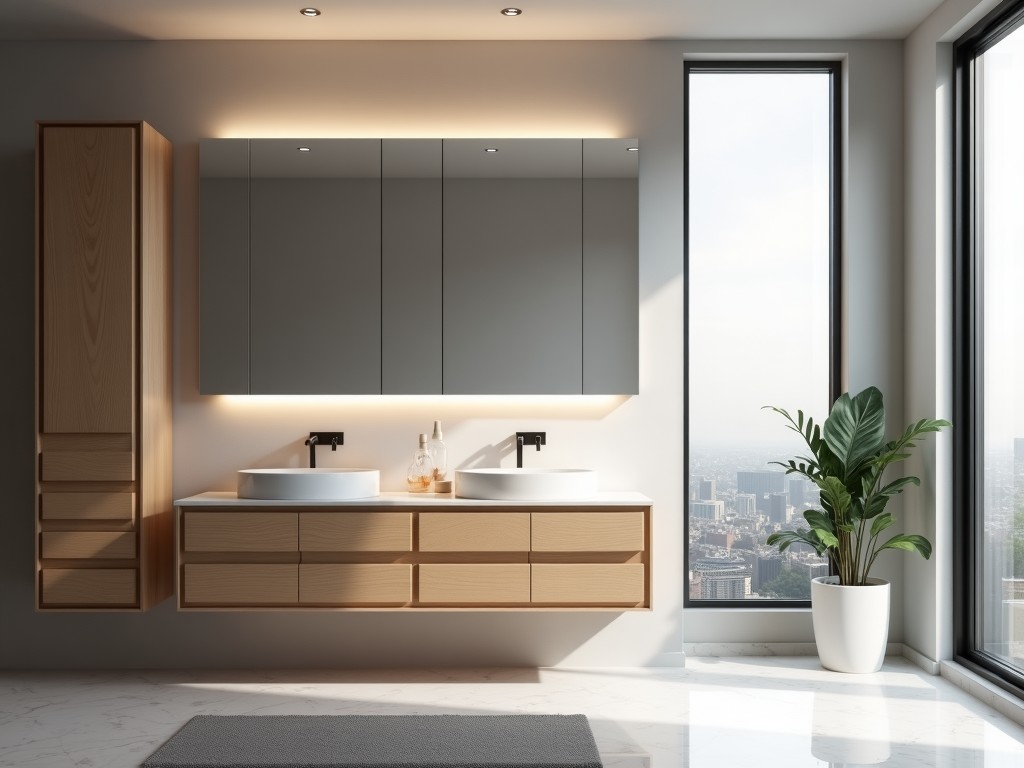
China Bathroom Vanity Manufacturer
Industrial buyers sourcing bathroom vanities require clear technical specifications to evaluate manufacturing capability, material consistency, and long-term performance. This page details the
- Category:
- Bathroom Cabinet
China Bathroom Vanity Manufacturer
Industrial buyers sourcing bathroom vanities require clear technical specifications to evaluate manufacturing capability, material consistency, and long-term performance. This page details the engineering considerations, production processes, and quality controls relevant to sourcing from Chinese manufacturers, focusing on measurable characteristics rather than subjective claims.
Bathroom vanities integrate structural components, surface finishes, and hardware systems that must withstand humid environments, frequent use, and chemical exposure from cleaning agents. Material selection, joint integrity, and surface treatment directly impact service life and maintenance requirements.
Manufacturers in China operate across varying scales and specialization levels, from mass-production facilities to custom fabrication shops. Understanding their technical capabilities—such as CNC machining tolerance, edge banding adhesion strength, and coating thickness uniformity—enables buyers to assess suitability for specific project requirements.
Material Selection and Performance Characteristics
The substrate material determines dimensional stability, moisture resistance, and load-bearing capacity. Common options include medium-density fiberboard (MDF), particleboard, plywood, and solid wood, each with distinct engineering properties.
MDF offers uniform density and smooth machinability but requires edge sealing to prevent water ingress. Typical thickness ranges from 16mm to 25mm for carcass panels, with internal bond strength exceeding 0.6 MPa in compliant grades. Particleboard is lighter and less expensive but has lower screw withdrawal resistance, often necessitating metal inserts or cam locks for hardware attachment.
Plywood provides superior moisture resistance due to cross-laminated veneers, with typical face veneer thickness of 0.6mm and core layers rated for exterior use (WBP glue). Solid wood vanities use species like oak or maple, with moisture content stabilized to 8–12% via kiln drying to minimize seasonal movement.
Surface finishes include melamine-faced panels, PVC foil, acrylic laminate, and polyurethane paint. Melamine offers abrasion resistance (Taber test >300 cycles) and stain resistance, while polyurethane coatings provide seamless film formation with dry film thickness of 40–60 microns and chemical resistance to common household cleaners.
Manufacturing Processes and Tolerance Control
Dimensional accuracy affects assembly efficiency and field fit. CNC cutting tolerances for panel dimensions typically hold ±0.5mm, while drilling hole placement for hardware maintains ±0.3mm deviation to ensure proper alignment of hinges, drawer slides, and faucet holes.
Edge banding application uses hot-melt adhesives with activation temperatures between 180–200°C. Peel strength after 24 hours conditioning at 23°C/50% RH exceeds 1.5 N/mm for PVC and 2.0 N/mm for ABS, reducing delamination risk in high-humidity zones. Laser edge banding eliminates visible seams by polymerizing the edge material directly, though it requires higher energy input.
Drawer systems are specified by load capacity and extension type. Side-mounted ball-bearing slides commonly rated for 30–40 kg dynamic load per pair, with side clearance of 12.5mm ±0.5mm. Undermount slides offer full-extension capability but require precise cabinet depth tolerances (±1mm) to avoid binding.
Door alignment depends on hinge type and adjustment range. European-style concealed hinges provide 3-way adjustment (depth, side, height) with typical range of ±2mm per axis, allowing compensation for panel warping or installation variance.
Quality Control and Testing Protocols
Objective quality verification reduces field failure risk. Manufacturers implement incoming material checks, in-process inspections, and final audits based on defined acceptance criteria.
Incoming MDF or particleboard is tested for moisture content (target 4–10%), formaldehyde emission (E1 or CARB2 compliance), and density variation (±10% across board). Surface coating adhesion is measured via cross-hatch test (ASTM D3359) with requirement of 4B or better (≤5% coating removal).
Finished units undergo functional testing: door opening/closing cycles (50,000 repetitions), drawer load cycling (20 kg load, 10,000 cycles), and water resistance exposure (4 hours at 40°C/95% RH). Visual inspection checks for surface defects, color variation (ΔE < 2.0 under D65 lighting), and edge sealing continuity.
Packaging validation includes drop testing (ISO 2248) from 100mm height on all corners and edges, and vibration testing simulating truck transport (10–200 Hz frequency sweep). Corner protectors and edge guards are specified based on product weight and dimensions.
Customization Options and Project Integration
Customization extends beyond dimensions to include functional integration and performance tailoring. Manufacturers adjust specifications based on project constraints such as wall structure, plumbing layout, and user requirements.
Vanity depth typically ranges from 450mm to 550mm to accommodate standard sink bowls and clearance for plumbing traps. Width is modular, commonly in 100mm increments from 600mm to 1800mm for single or double basin configurations. Height adjustment (750mm–850mm) accommodates varying countertop thicknesses and user ergonomics.
Cutouts for sinks and faucets are programmed via CNC with tolerances of ±1mm to ensure proper fit. Overflow holes, soap dispenser holes, and electrical cutouts for lighting or outlets follow similar precision. Back panels may include service voids (50mm depth) for plumbing access.
Hardware selection impacts usability and longevity. Soft-close hinges reduce impact force by 60–80% compared to standard hinges, measured via deceleration testing. Drawer dampers control closing speed to 0.3–0.5 m/s. Materials include zinc alloy, stainless steel, or brass, with salt spray test ratings (ASTM B117) of 96+ hours for corrosion resistance in coastal environments.
| Parameter | Typical Range | Testing Standard |
|---|---|---|
| Panel Thickness | 16–25 mm | Caliper measurement (ISO 13061-1) |
| Edge Banding Peel Strength | ≥1.5 N/mm (PVC) | ASTM D903 |
| Drawer Slide Load Capacity | 30–40 kg per pair | ANSI/BHMA A156.9 |
| Coating Adhesion | 4B or better | ASTM D3359 |
| Formaldehyde Emission | E1 / CARB2 Compliant | ASTM E1333 / EN 717-1 |
Applications in Commercial and Residential Projects
Bathroom vanities serve distinct functional roles depending on the environment. In residential settings, design flexibility and moisture resistance are priorities, with frequent exposure to personal care products and temperature fluctuations.
In commercial applications—such as hotels, healthcare facilities, and office buildings—durability, ease of maintenance, and compliance with accessibility standards (e.g., ADA knee clearance) become critical. Wall-mounted vanities reduce floor cleaning obstruction, while seamless countertops minimize microbial harborage points.
High-traffic public restrooms benefit from impact-resistant materials and vandal-resistant hardware. Solid surface or quartz countertops integrated with the vanity base eliminate seams, reducing water penetration and simplifying cleaning protocols. Anti-ligature hardware is specified in behavioral health units to mitigate safety risks.
Marine and coastal installations require enhanced corrosion resistance. Stainless steel hardware (grade 316) and marine-grade plywood substrates withstand salt spray and humidity cycles. Manufacturers adjust adhesive selection and sealing methods to prevent delamination under prolonged moisture exposure.
For technical inquiries, material data sheets, or to discuss project-specific requirements such as load testing, finish durability, or custom dimensions, contact the manufacturer directly. Provide detailed specifications including elevation drawings, material preferences, and performance criteria to receive accurate quotations and lead times.
Request samples to evaluate surface texture, edge quality, and hardware operation under simulated use conditions. Third-party testing reports for formaldehyde emission, coating adhesion, and load capacity are available upon request for qualifying projects.



