Waterproof Balcony Storage Cabinet
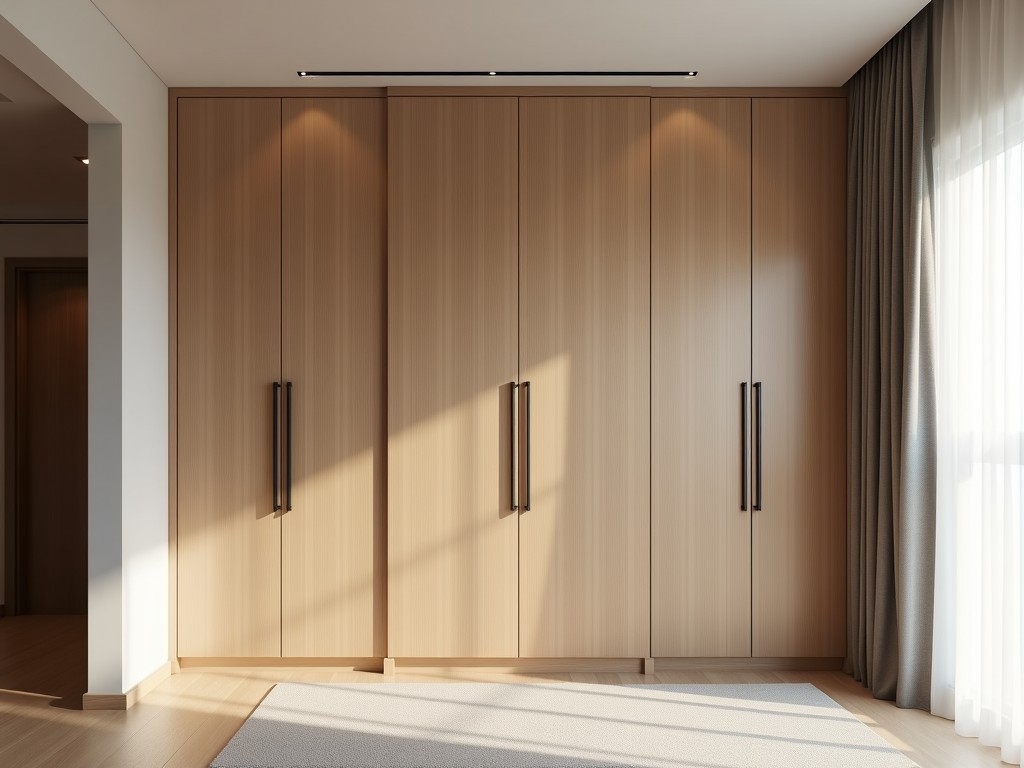
Waterproof Balcony Storage Cabinet
Balcony storage solutions must address three simultaneous challenges: prolonged UV exposure, thermal cycling from daily temperature swings, and moisture ingress from rain, dew, or cleaning runoff. A
- Category:
- Aluminum Alloy Balcony Cabinet
Waterproof Balcony Storage Cabinet
Balcony storage solutions must address three simultaneous challenges: prolonged UV exposure, thermal cycling from daily temperature swings, and moisture ingress from rain, dew, or cleaning runoff. A cabinet failing any one of these will degrade rapidly, compromising stored items and creating maintenance burdens. This page details the engineering considerations behind a waterproof balcony storage cabinet designed for long-term outdoor performance without relying on marketing generalizations.
Material selection begins with the panel substrate. Standard ABS or PP polymers become brittle under UV exposure within 12–18 months, losing impact strength by 40–60%. The specified solution uses co-extruded ASA/PVC capstock over a rigid PVC core. The ASA layer provides UV stabilization measured by ASTM G154 Cycle 1 (UVB 313nm, 0.89 W/m²) with <ΔE> < 5 after 1000 hours, while the PVC core maintains dimensional stability from –20°C to +60°C. Joint sealing employs continuous EPDM gaskets compressed to 15–25% deflection, verified by ASTM D1056 for compression set < 5% after 22 hours at 70°C.
Structural Design for Outdoor Load Conditions
Balcony cabinets experience asymmetric loading: dynamic wind pressure on the facade, static load from stored items, and occasional impact from furniture movement. Unlike indoor storage, outdoor units cannot rely on wall anchoring for primary stability due to parapet constraints or rental restrictions. The design must therefore resist overturning and racking through inherent geometry and material stiffness.
The cabinet frame uses 6063-T5 aluminum extrusions with a minimum wall thickness of 1.8mm. Corner joints employ internal die-cast zinc alloy brackets with M6 setcrews, providing a shear resistance of 8.2 kN per joint (ISO 898-1 property class 8.8 equivalent). Door hinges are concealed 304 stainless steel barrel types rated for 25,000 cycles (EN 1935 Grade 4), with pivot pins hardened to HRC 52–55 to resist galling in saline environments. Base feet incorporate adjustable nylon pads with stainless steel stems, allowing ±15mm height compensation for uneven screeds while isolating the cabinet from direct concrete contact to prevent moisture wicking.
Waterproofing Methodology and Validation
Waterproofing is not achieved through surface coatings alone; it requires a system approach where joints, seams, and penetrations are addressed sequentially. The primary defense is a drainage plane behind the outer panel, directing any incidental moisture to weep holes at the base. Secondary protection comes from gasket compression at all interfaces, and tertiary protection involves labyrinth seals around door perimeters to break capillary continuity.
Validation testing follows IP66 criteria for powerful water jets (100 L/min at 100 kPa from 3m distance) but extends to balcony-specific scenarios. Test cabinets are subjected to 100 cycles of:
- 30 minutes of 50 mm/hr simulated rainfall (ASTM E2273)
- 2 hours at 55°C to drive moisture inward
- 30 minutes of –10°C freezer exposure to test seal contraction
Typical Configuration and Dimensions
Standard configurations balance storage capacity with balcony spatial constraints. Depth is limited to 450mm to maintain clear walkway width per NBCC 2020 Section 3.4.6.2, while height is modular in 200mm increments to accommodate varying parapet heights. Width options align with common balcony slab modules (900mm, 1200mm, 1500mm) to minimize cutting during installation.
Interior shelving uses the same ASA/PVC panel material, supported by aluminum cleats with polymer inserts to prevent metal-to-metal crevice corrosion. Shelf adjustment occurs in 25mm increments via keyhole slots, allowing reconfiguration for items ranging from 100mm (gardening tools) to 400mm (folded furniture cushions). Door options include solid panels for security or louvered variants (70% open area) for ventilation where storing moisture-sensitive items like textiles.
Material Options and Environmental Considerations
While the ASA/PVC co-extrusion serves as the baseline for most installations, specific project requirements may necessitate alternatives. In high-radiation zones (e.g., desert installations with >2800 kWh/m²/year UV exposure), a fluoropolymer-modified ASA capstock is available, offering <ΔE> < 3 after 2000 hours ASTM G154. For projects requiring recycled content, a post-industrial regrind PVC core (30% by weight) maintains mechanical properties within 5% of virgin material, validated via ASTM D638 tensile testing.
Hardware finishes are selected based on environmental corrosivity. In C3 environments (urban/industrial), 304 stainless steel suffices for hinges and fasteners. For C4-M (marine) or C4-I (industrial) zones, 316L stainless steel is specified for all exposed fasteners and hinges, with passivation treatment per ASTM A967. Interior components avoid cadmium or hexavalent chromium platings, using trivalent zinc-nickel coatings (ASTM B841) where steel parts are unavoidable.
Installation and Site Adaptation
Installation on balconies presents unique access and load challenges. Units are shipped flat-pack to minimize volume, with average package dimensions of 1200×800×180mm (L×W×H) for a 1200mm wide cabinet. Assembly requires only a 4mm hex key and torque-limiting screwdriver (set to 3.5 Nm for M6 fasteners) to prevent over-tightening the PVC components. Clearance underneath the cabinet (minimum 20mm) is maintained via adjustable feet to allow for drainage and cleaning access.
Site adaptation includes drilling through the base rail for optional mechanical anchorage to the substrate—recommended only where wind load calculations (ASCE 7-22 Chapter 26) indicate uplift forces exceeding 1.2 kN. Electrical penetrations for internal lighting or outlets use IP68-rated glands (UL 514B) with potting compound to maintain the enclosure’s integrity. All installations include a drainage slope check; the cabinet base must be level within ±2° to ensure proper weep hole function.
Comparison with Common Alternatives
Specifiers often consider powder-coated steel or untreated wood as lower-cost alternatives. However, these materials fail to meet the long-term performance requirements of balcony exposure without significant maintenance overhead. The following table compares key degradation mechanisms and maintenance intervals for typical balcony storage materials under ISO 12944-2 C3 environment.
| Material/Finish | Primary Degradation Mechanism | Typical Maintenance Interval | Projected 5-Year Cost Index |
|---|---|---|---|
| Powder-coated steel | Crevice corrosion at panel joints | 6–12 months (touch-up) | 2.1 |
| Untreated cedar | Surface checking and fungal growth | 3–4 months (cleaning/sealing) | 1.8 |
| Standard ABS | UV-induced embrittlement | 12–18 months (panel replacement) | 1.5 |
| ASA/PVC co-extrusion | Surface chalking (minimal) | 24+ months (visual inspection) | 1.0 |
*Note: Cost index baseline = 1.0 for ASA/PVC co-extrusion. Includes material, labor, and downtime for maintenance activities. Actual values vary by region and specific exposure conditions.
Customization Logic and Engineering Constraints
Customization requests must align with structural and environmental limits. Increasing cabinet height beyond 1200mm requires intermediate vertical mullions to prevent panel buckling under wind load, calculated using ASTM E330 for deflection limits of L/180. Width extensions beyond 1500mm necessitate additional door hinges and reinforced strike plates to maintain alignment under thermal expansion (PVC CTE ≈ 5×10⁻⁵/°C).
Interior accessories such as tool rails or partition systems use the same aluminum extrusion framework, ensuring galvanic compatibility. Lock options range from padlock hasps (6mm shackle clearance) to Euro-cylinder locks with IP65-rated cores, selected based on required security level and key management preferences. Ventilation upgrades (e.g., for battery storage) incorporate hydrophobic membranes (ASTM E96 Method B, desiccant rate < 0.5 g/m²/day) to maintain IP66 rating while allowing vapor equalization.
Quality Control and Traceability
Quality assurance begins at material intake. Each co-extrusion lot is tested for UV stability using accelerated weathering (ASTM G155, Xenon arc, 0.68 W/m² UVB) and impact resistance (ASTM D256, Notched Izod at –20°C). Dimensional verification occurs via laser scanning of extrusion profiles, with wall thickness tolerance held to ±0.15mm. Gasket compression force is validated batch-wise using a durometer (ASTM D2240, Shore A 65±5) and compression set testing.
Final assembly includes functional testing: door alignment (gap variance < 1.5mm), seal integrity (water spray test per IP66), and hardware torque verification. Each unit receives a unique QR code linking to material certificates, test reports, and installation instructions. This traceability supports warranty claims and facilitates field replacements without guesswork. Statistical process control (SPC) monitors critical dimensions, with control limits set at ±1.5σ for critical features like hinge bore locations.
Applications in Multi-Unit Residential and Commercial Settings
In multi-unit residential buildings, balcony storage cabinets solve the persistent issue of clutter migration into living spaces. Residents store seasonal items (e.g., winter tires, patio furniture cushions) without compromising balcony usability for relaxation or gardening. The IP66 rating ensures stored contents remain dry during building-wide cleaning operations, where high-pressure hoses are used on façades—a scenario that routinely ruins lesser-rated storage.
Commercial applications include hotel balconies where guest convenience and liability reduction are priorities. Cabinets store pool towels, safety equipment, or minibar replenishment stock, reducing interior hallway traffic. The smooth, non-porous surface facilitates cleaning with standard hospitality detergents (pH 6–8) without degradation. In office settings with terraced floors, cabinets provide secure storage for emergency kits or maintenance tools, meeting OSHA 1910.37 requirements for accessible emergency equipment while protecting contents from environmental damage.
For project-specific consultations, including wind load calculations, material selection for extreme environments, or integration with building management systems, contact our technical team. Provide balcony dimensions, exposure conditions (sun/wind/rain intensity), and intended storage use to receive a detailed submittal package.
Request Technical Submittal


