Oem Odm Outdoor Laundry Balcony Cabinet
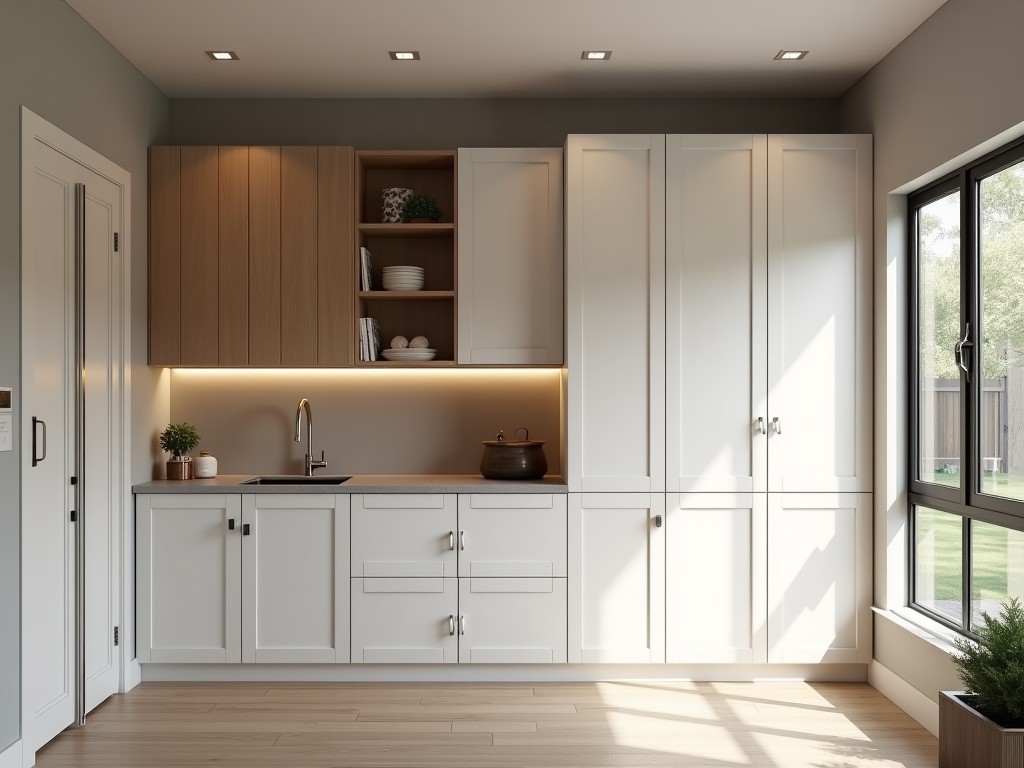
Oem Odm Outdoor Laundry Balcony Cabinet
Outdoor laundry balcony cabinets are engineered enclosures designed to house washing machines, dryers, and associated plumbing or electrical components in exposed balcony or terrace environments.
- Category:
- Aluminum Alloy Balcony Cabinet
OEM ODM Outdoor Laundry Balcony Cabinet
Outdoor laundry balcony cabinets are engineered enclosures designed to house washing machines, dryers, and associated plumbing or electrical components in exposed balcony or terrace environments. These units must withstand prolonged UV exposure, temperature cycling, moisture ingress, and wind loading while maintaining structural integrity and operational accessibility. Selecting the appropriate cabinet involves evaluating material compatibility with local climate conditions, load-bearing requirements for appliance weight and dynamic forces during spin cycles, and integration with drainage and ventilation systems. OEM and ODM services enable customization of dimensions, material thickness, fastening methods, and surface finishes to align with specific building codes, architectural constraints, and end-user functional needs.
Material Selection for Long-Term Outdoor Exposure
Material choice directly impacts corrosion resistance, thermal expansion behavior, and maintenance frequency. Common options include powder-coated galvanized steel (typically 1.2–2.0 mm thickness), marine-grade aluminum alloys (5052 or 6063-T5, 1.5–3.0 mm), and UV-stabilized polypropylene or fiberglass-reinforced polymers. Powder coating provides a barrier against moisture and UV degradation, with typical coating thickness of 60–80 microns and adhesion strength exceeding 5B per ASTM D3359. Aluminum naturally forms a protective oxide layer, reducing rust risk in coastal environments, while polymer options eliminate corrosion concerns entirely but may require reinforcement to handle point loads from appliance feet or brackets.
Structural Design Considerations for Dynamic Loads
Washing machines generate significant vertical and horizontal forces during spin cycles, often exceeding 300 N peak load depending on drum size and spin speed. Cabinet design must account for these dynamic loads through reinforced framing, strategic bracing, and isolation mounts to prevent resonance or fatigue failure. Typical approaches include adding vertical stiffeners at corners, using gusset plates at joint connections, and incorporating rubber or neoprene vibration pads between the appliance base and cabinet floor. Deflection limits are generally kept under 2 mm under operational load to prevent door misalignment or seal wear over time.
Environmental Sealing and Ventilation Requirements
Effective sealing prevents water ingress during rain or cleaning while allowing sufficient airflow for heat dissipation from dryers and condensation management. IP54-rated sealing is commonly specified for cabinet doors and access panels, using EPDM or silicone gaskets with compression angles of 20–30% to maintain seal integrity over thermal cycles. Ventilation is achieved through louvered panels or passive vents sized to provide minimum 50 cm² free area per kW of dryer output, positioned to avoid direct rain entry while promoting convective airflow. Condensate drainage routes are integrated via sloped floors (typically 2–5° pitch) and threaded drain outlets (½” or ¾” NPT) connected to building waste lines.
Customization Options in OEM/ODM Manufacturing
OEM/ODM services allow adaptation to site-specific constraints such as balcony width, railing height, door swing direction, and utility connection points. Typical customizable parameters include overall dimensions (width: 600–1200 mm, depth: 500–700 mm, height: 800–1800 mm), panel thickness, hinge type (concealed, butt, or piano), lock mechanism (cam lock, push-to-close, or electronic), and surface finish (RAL color, textured, or wood grain). Additional features may include integrated shelving, fold-down ironing boards, retractable hoses, or LED lighting with IP65 rating. Tooling adjustments for new designs are typically feasible within 2–4 weeks for sheet metal or extrusion-based designs.
Quality Control and Testing Protocols
Quality assurance involves multiple inspection points to verify dimensional accuracy, coating integrity, and functional performance. Incoming materials are checked for thickness tolerance (±0.1 mm for steel, ±0.2 mm for aluminum) and coating adhesion. Assembled units undergo water spray testing (per IEC 60529 IPX4) for 10 minutes at 10 L/min to validate sealing effectiveness. Load testing applies 1.5x expected operational force for 10,000 cycles to assess joint and fastener durability. Final inspection includes door alignment gap measurement (<1.5 mm variance), smooth operation of hinges and locks, and verification of drain flow rate (>1.5 L/min under gravity feed).
Packaging and Logistics for Damage Prevention
Cabinet components are prone to edge damage and coating scratches during transit, necessitating protective packaging. Standard practice includes wrapping panels in polyethylene foam (2–3 mm thick), securing corners with cardboard edge protectors, and placing units in double-wall corrugated boxes or wooden crates for LCL shipments. For FCL, units are stacked on pallets with interleaving sheets and secured via polyester strapping. Internal bracing prevents panel movement, and humidity indicators are included to monitor moisture exposure. Labeling includes handling instructions, center of gravity points, and QR codes linking to installation manuals and certification documents.
| Parameter | Typical Range / Specification | Notes |
|---|---|---|
| Panel Material Thickness | 1.2–3.0 mm | Depends on material and span |
| Coating Thickness (Powder) | 60–80 microns | ASTM D1186 |
| IP Rating (Door Seals) | IP54 | IEC 60529 |
| Ventilation Free Area | ≥50 cm² per kW dryer | Passive or louvered |
| Deflection Limit (Operational) | <2 mm | Under dynamic load |
| Drain Outlet Size | ½” or ¾” NPT | Threaded, PVC or brass |
| Custom Lead Time (Tooling) | 2–4 weeks | Sheet metal/extrusion |
Choosing an OEM/ODM partner for outdoor laundry balcony cabinets requires evaluation of their engineering capability, material sourcing flexibility, and experience with environmental durability testing. Suppliers should provide documentation on material certifications (e.g., coil coating reports, alloy mill test reports), prototype validation data, and references to similar installations in comparable climates. Clear communication of site conditions—such as wind load zones, salinity exposure, temperature extremes, and drainage access—enables accurate design validation. Early involvement in the design phase allows for optimization of material usage, reduction of thermal bridging, and integration of service access points without compromising structural performance.



