Oem Balcony Utility Storage Cabinet
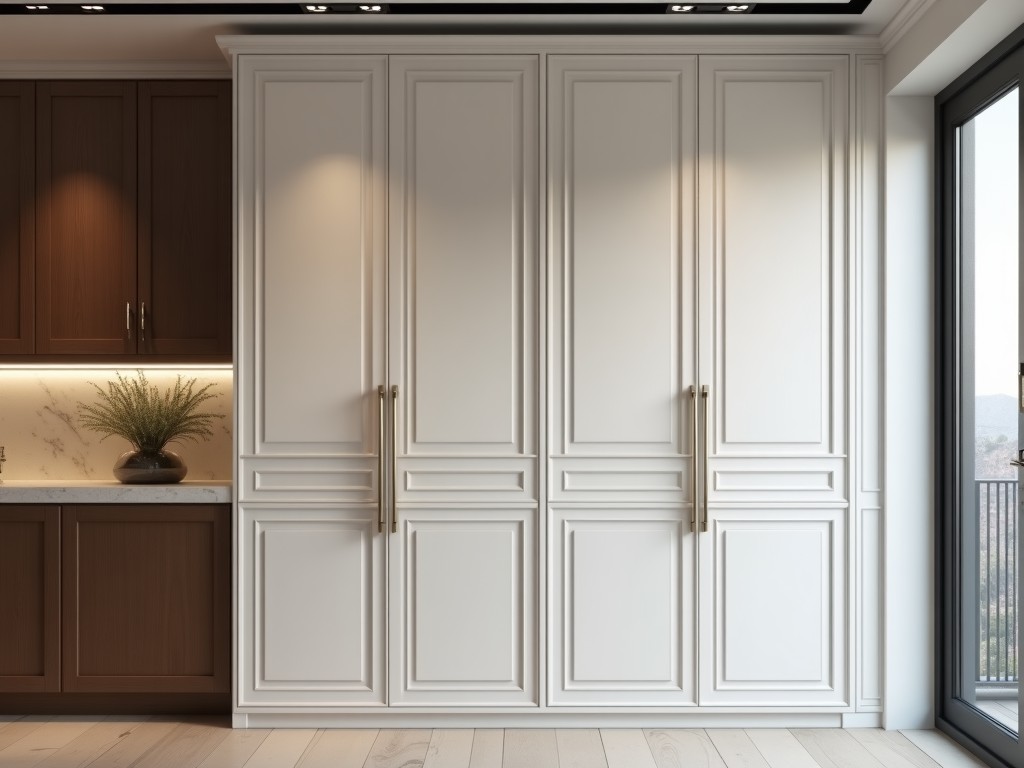
Oem Balcony Utility Storage Cabinet
Balcony utility storage cabinets are engineered enclosures designed to organize tools, maintenance supplies, and seasonal items in outdoor residential or light commercial settings. These units must
- Category:
- Aluminum Alloy Balcony Cabinet
OEM Balcony Utility Storage Cabinet
Balcony utility storage cabinets are engineered enclosures designed to organize tools, maintenance supplies, and seasonal items in outdoor residential or light commercial settings. These units must withstand prolonged UV exposure, moisture ingress, and temperature cycling while maintaining structural integrity and secure access. Material selection, sealing methods, and mounting configurations directly influence long-term performance in exposed environments.
Unlike indoor storage solutions, balcony cabinets require corrosion-resistant hardware, UV-stabilized polymers or coated metals, and drainage-aware bases to prevent water pooling. Load distribution across mounting points is critical, especially when installed on railings or cantilevered slabs where dynamic forces from wind or use can induce fatigue. Dimensional accuracy ensures compatibility with standard balcony railings and door clearances.
OEM production allows integration of brand-specific aesthetics, custom internal layouts, and application-driven features such as lock types, vent placement, or accessory rails. Minimum order quantities and tooling considerations are balanced against design flexibility to support both prototype validation and volume manufacturing. Clear communication of tolerances, material certifications, and assembly methods reduces procurement risk.
Core Design Considerations
Structural rigidity begins with frame geometry and panel thickness. For polymer-based cabinets, wall thicknesses typically range from 2.5 to 4 mm to resist deflection under load while minimizing weight. Metal variants use 0.8–1.2 mm galvanized or powder-coated steel with folded edges to increase moment of inertia. Reinforcement ribs are strategically placed at corners and mid-span to prevent racking under asymmetric loads.
Sealing performance is defined by gasket compression and overlap design. EPDM or silicone gaskets with 20–30% compression set provide IP54-rated protection against splashing water and dust ingress. Overlap joints with drainage channels direct moisture away from seals, reducing long-term degradation. Compression is maintained via snap-fit lips or cam locks that apply uniform pressure without over-stressing materials.
Ventilation is often overlooked but critical in enclosed outdoor cabinets. Passive vents with hydrophobic membranes allow pressure equalization while blocking liquid water and particulates. Placement at high and low points encourages convective airflow to reduce condensation buildup inside the cabinet, protecting stored contents from humidity damage.
Material Options and Performance
Material choice affects weight, UV stability, impact resistance, and end-of-life recyclability. Common options include polypropylene copolymer (PP-Co), acrylonitrile styrene acrylate (ASA), and powder-coated galvanized steel. Each offers distinct trade-offs in cost, weatherability, and mechanical properties suited to different balcony exposures and load expectations.
| Material | UV Stability (Hours to 50% Property Retention) | Impact Resistance (Notched Izod, J/m) | Typical Wall Thickness (mm) |
|---|---|---|---|
| Polypropylene Copolymer (PP-Co) | 800–1200 | 40–60 | 3.0–4.0 |
| ASA | 2000–3000 | 50–70 | 2.5–3.5 |
| Powder-Coated Galvanized Steel | >5000 (coating dependent) | Not applicable (ductile failure) | 0.8–1.2 |
ASA provides superior color retention and impact strength compared to standard PP, making it suitable for high-exposure balconies in coastal or high-altitude regions. PP-Co offers lower material cost and good chemical resistance but requires UV stabilizers for extended outdoor use. Steel variants provide the highest load capacity and fire resistance but increase weight and require meticulous coating damage inspection during installation.
Inserts and mounting brackets are typically made from nylon 6/6 or stainless steel to avoid galvanic corrosion when paired with aluminum railings. Threaded inserts for door hinges and locks are heat-set or ultrasonically welded into polymer walls to prevent pull-out under cyclic loading. All fasteners comply with ISO 3506-1 A2 or A4 stainless steel standards for corrosion resistance.
Customization and OEM Integration
OEM development begins with defining functional envelopes: internal volume, door swing direction, mounting interface, and access frequency. CAD models are validated against balcony railing profiles and door clearances to prevent interference. Internal layouts can include adjustable shelves, tool hooks, bin rails, or removable trays configured for specific maintenance kits or gardening supplies.
Locking mechanisms range from cam locks with cylinder keys to padlock hasps or electronic keypads, selected based on security requirements and user convenience. Handle ergonomics are tested for gloved operation and wet-condition grip. Labeling areas, brand logos, and color matching to RAL or Pantone standards are incorporated during tooling or via post-molding decoration such as pad printing or in-mold labeling.
Packaging is designed for parcel shipment or palletized transport, with corner protection and moisture barriers. Assembly instructions include torque values for fasteners and sealant application points if required. Compliance with REACH, RoHS, and outdoor weathering standards (e.g., ASTM G154) is documented upon request. Prototypes are available for fit and function validation before tooling investment.
Quality Control and Validation
Dimensional inspection uses CMM or optical comparators to verify critical features: mounting hole patterns, door alignment, and seal compression gaps. First-article inspection reports include GD&T validation for functional interfaces. Cycle testing simulates 5,000+ open/close operations with load to assess wear on hinges, latches, and gaskets. Hinge torque retention is measured before and after cycling to detect creep or relaxation.
Weathering exposure follows accelerated protocols: UV-B irradiation at 0.89 W/m², condensation cycles, and temperature swings from –20°C to +60°C. Color change (ΔE), gloss retention, and impact strength are measured post-exposure to validate material performance. Salt spray testing (ASTM B117) evaluates coating and fastener resistance for marine-adjacent installations.
Load testing applies static and dynamic forces to mounting points, simulating wind gusts and user loading. Deflection limits are set to <2 mm under 150 N vertical load to ensure door alignment is maintained. Resonance testing identifies natural frequencies that could amplify vibration from balcony rail traffic or wind-induced oscillations. All test data is traceable to specific production lots and material batches.
Applications and Installation
Balcony utility cabinets serve residential high-rises, mixed-use developments, and boutique hotels where exterior space is limited but maintenance access is essential. Common stored items include balcony cleaning supplies, minor repair tools, spare light bulbs, and seasonal decor. In hospitality settings, they house linens, glassware restock kits, or guest amenity replacements, reducing indoor clutter and improving service efficiency.
Installation methods vary by substrate: over-railing hooks for steel or aluminum balustrades, base-mounted brackets for concrete slabs, or through-bolt adapters for glass-panel systems. Load is distributed across multiple points to prevent point loading on thin railings. Clearance from overhead projections and door swings is verified during site assessment to avoid interference with building facade elements or neighboring units.
Maintenance access is designed for quarterly inspection: seal condition, fastener tightness, and drain hole clearance. Users are advised to clean surfaces with mild soap and water, avoiding abrasive cleaners that degrade UV-stabilized surfaces. Lubrication of hinges and locks with silicone-based compounds prevents seizure without attracting dust. Spare gaskets and touch-up paint are recommended for long-term upkeep in harsh environments.
For technical consultation, customization requests, or quotation, please contact our engineering team.
Request Technical Specification Schedule a Design Review