Moisture Resistant Laundry Cabinet Supplier
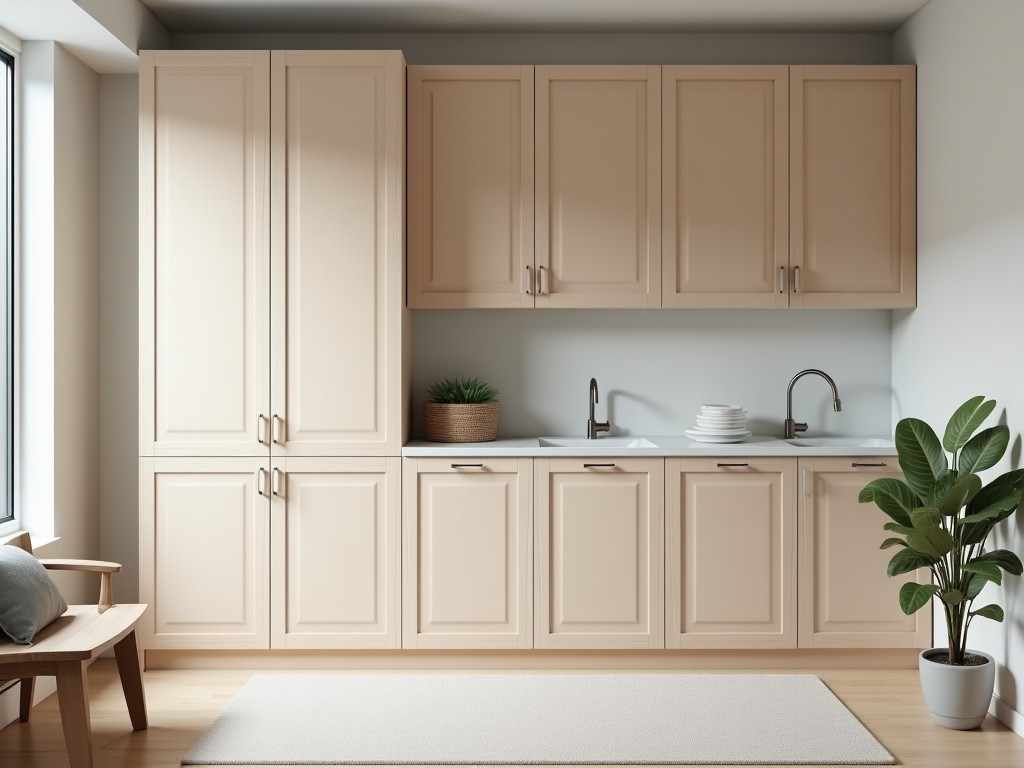
Moisture Resistant Laundry Cabinet Supplier
Industrial laundry facilities operate in environments with sustained high humidity, frequent water exposure, and chemical vapors from detergents and disinfectants. Standard cabinetry materials
- Category:
- Aluminum Alloy Balcony Cabinet
Moisture Resistant Laundry Cabinets: Design, Materials, and Applications for Industrial Environments
Industrial laundry facilities operate in environments with sustained high humidity, frequent water exposure, and chemical vapors from detergents and disinfectants. Standard cabinetry materials degrade rapidly under these conditions, leading to swelling, delamination, corrosion, and microbial growth. Moisture resistant laundry cabinets are engineered specifically to maintain structural integrity, hygiene, and functionality in such demanding settings. This page explains the technical considerations behind their design, material selection, and performance characteristics to support informed procurement decisions.
Unlike residential or office storage solutions, industrial laundry cabinets must withstand continuous moisture ingress, thermal cycling, and mechanical loads from heavy linens and equipment. Failure modes include warping of panels, rusting of hinges and slides, and deterioration of seals. Effective moisture resistance is not merely a surface treatment but a system-level design approach involving substrate selection, edge sealing, joint construction, and hardware specification.
The following sections detail the key factors that determine long-term performance in wet environments. Each aspect is explained from an engineering perspective to clarify why certain choices reduce lifecycle cost and operational risk.
Core Material Systems for Humidity Resistance
The substrate material forms the foundation of moisture resistance. Common options include marine-grade plywood, high-density polyethylene (HDPE), polypropylene copolymers, and stainless steel grades 304 or 316. Each has distinct mechanical, chemical, and thermal properties that influence suitability.
Marine-grade plywood uses waterproof phenolic resins and void-free core construction to resist delamination. It is typically specified with a minimum of 5 plies and exterior-grade adhesive (WBP - Weather and Boil Proof). Thickness ranges from 12mm to 18mm for cabinet bodies, with edges sealed using PVC edge banding or polyurethane coatings to prevent capillary water uptake.
HDPE and polypropylene offer inherent water immunity and chemical resistance but have lower rigidity than wood or metal. They are often reinforced with ribbing or framed structures to support loads exceeding 50kg per shelf. These polymers operate effectively between -20°C and 80°C and are non-corrosive, making them suitable for chemical storage zones within laundry facilities.
Stainless steel cabinets provide the highest durability in corrosive environments. Grade 304 resists general moisture and mild detergents, while grade 316 adds molybdenum for enhanced resistance to chlorides and disinfectants containing bleach or peroxides. Sheet thickness typically ranges from 0.8mm to 1.2mm for doors and 1.0mm to 1.5mm for frames, with all seams continuously welded and ground smooth to eliminate crevices where moisture can accumulate.
Construction Methods That Prevent Moisture Ingress
Even the best materials fail if joints and penetrations allow water entry. Industrial laundry cabinets use specific construction techniques to minimize weak points. Edge sealing is critical—raw edges of composite materials are coated with epoxy, PVC, or hot-melt adhesives to create a continuous barrier.
Panel joints are often designed with overlapping shiplap or tongue-and-groove profiles, then sealed with flexible polyurethane or silicone sealants rated for permanent immersion. These sealants maintain elasticity after curing, accommodating thermal expansion without cracking. Mechanical fasteners such as screws are avoided in favor of concealed cam locks, dowels, or ultrasonic welding in plastic cabinets to eliminate penetration points.
For stainless steel units, all seams are TIG welded, followed by passivation to restore the chromium oxide layer. Doors and drawers incorporate compression gaskets made of EPDM or neoprene, compressed to 15-25% deflection to achieve IP54-rated protection against splashing water. Hinges and slides are specified as stainless steel or polymer-based with sealed bearings to prevent rust-induced seizure.
Performance Characteristics and Testing Validation
Moisture resistance is quantified through standardized exposure tests rather than subjective claims. Common evaluations include cyclic humidity testing (per ASTM D2247), water soak resistance (ASTM D1308), and chemical spot testing with laundry detergents, chlorine bleach, and hydrogen peroxide solutions.
In cyclic humidity tests, samples are exposed to 95% RH at 38°C for 24 hours followed by drying at 23°C/50% RH for 24 hours, repeated for 10-20 cycles. Acceptable performance shows less than 0.5% dimensional change and no visible delamination, blushing, or surface degradation. For polyethylene and polypropylene, weight gain after 24-hour water immersion is typically under 0.01%, confirming non-hygroscopic behavior.
Chemical resistance is assessed by placing drops of concentrated agents on horizontal surfaces for 1-24 hours, then evaluating for staining, swelling, or loss of adhesion. Grade 316 stainless steel shows no visible effect after 24 hours with 10% sodium hypochlorite, while HDPE remains unaffected by most laundry alkalis and acids at concentrations up to 20%. These results inform material selection for specific zones—detergent storage requires higher chemical resistance than clean linen storage.
Design Considerations for Laundry Facility Workflows
Cabinet configuration must align with operational workflows to avoid creating bottlenecks or hygiene risks. In sorting areas, cabinets with ventilated backs or perforated doors allow air circulation to prevent mildew on damp linens. In clean storage zones, sealed interiors with smooth, crevice-free interiors meet hygiene standards for contaminant control.
Ergonomic factors influence height and access. Standard working heights range from 850mm to 950mm for countertop cabinets, with toe kicks of 100mm height and 50mm depth to allow close approach. Shelves are adjustable in 25mm increments to accommodate varying linen bundle sizes. Door swings are minimized in tight aisles by using sliding or bi-fold configurations, particularly in facilities with narrow corridors between washers and folders.
Integration with equipment is another consideration. Cabinets adjacent to extractors or ironers may require thermal insulation or air gaps to prevent heat transfer that could degrade plastic components. Electrical conduits for lighting or sensors are routed through sealed grommets to maintain moisture barriers. All design choices are evaluated not in isolation but as part of the facility’s environmental control and contamination prevention strategy.
| Material System | Typical Use Case | Key Advantage | Limitation to Consider |
|---|---|---|---|
| Marine-Grade Plywood (WBP) | General storage, folding areas | High rigidity, familiar workability | Requires meticulous edge sealing |
| HDPE / Polypropylene | Chemical storage, wet zones | Immune to water, chemical inert | Lower stiffness, needs framing |
| Stainless Steel 304 | Clean linen, uniform storage | Durable, easy to clean | Susceptible to chloride pitting |
| Stainless Steel 316 | Chemical handling, high-hygiene zones | Superior chloride resistance | Higher material cost |
The table above summarizes typical trade-offs observed in industrial laundry applications. Actual performance depends on fabrication quality, installation practices, and maintenance routines. For example, even 316 stainless steel can develop surface staining if not rinsed after chlorine exposure, highlighting the importance of operational procedures alongside material choice.
Customization is frequently required to match facility dimensions, equipment layouts, and process flows. Modular designs allow reconfiguration as needs change, with interchangeable panels, adjustable shelving, and standardized mounting interfaces. Lead times for custom units typically range from 4 to 8 weeks after design approval, depending on material availability and complexity.
Quality assurance involves dimensional inspection, seal continuity testing, and hardware function validation. Each unit is checked for square alignment (<2mm deviation over 1m), smooth door operation, and proper gasket compression. Documentation of material certifications (e.g., mill test reports for stainless steel, adhesive compliance for plywood) is provided upon request.
To discuss your specific laundry facility requirements, including environmental conditions, load expectations, and hygiene standards, please contact our technical team. We provide detailed material recommendations, CAD layouts, and quotation packages based on your operational parameters.
Request Technical Consultation