Laundry Room Organizer Cabinet Supplier
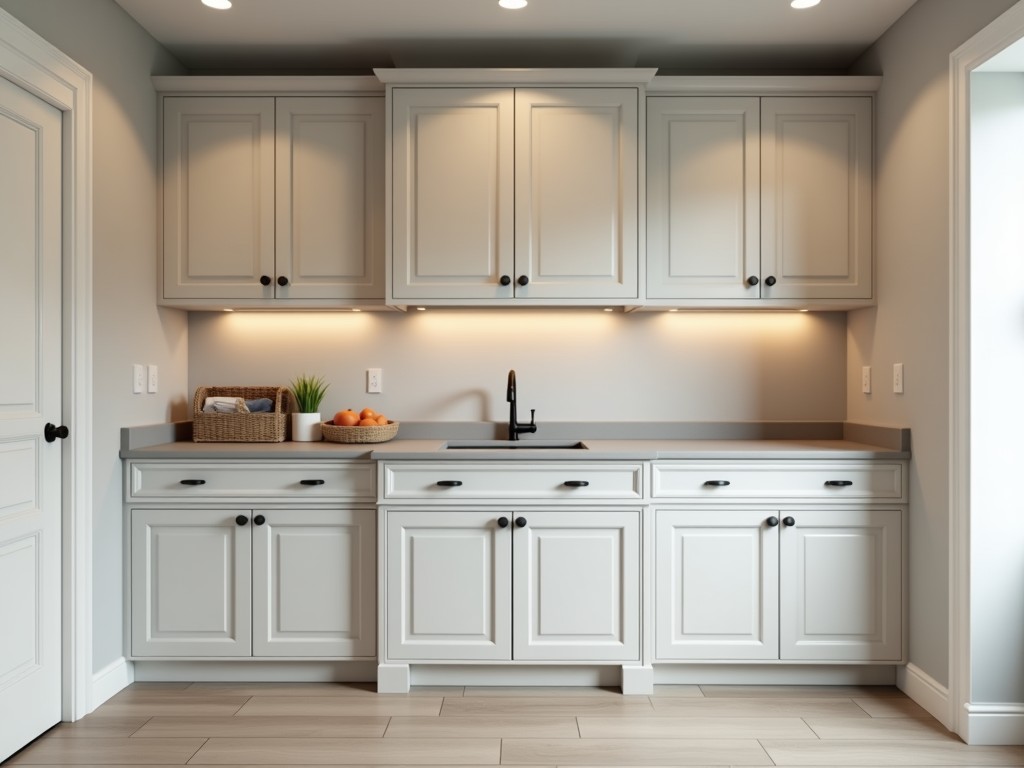
Laundry Room Organizer Cabinet Supplier
Industrial laundry facilities require storage solutions that withstand constant moisture, chemical exposure, and frequent use. Organizer cabinets designed for these environments must balance
- Category:
- Aluminum Alloy Balcony Cabinet
Laundry Room Organizer Cabinet Supplier
Industrial laundry facilities require storage solutions that withstand constant moisture, chemical exposure, and frequent use. Organizer cabinets designed for these environments must balance durability with functional accessibility to support efficient workflow in commercial and institutional settings.
As a supplier specializing in laundry room organizer cabinets, we engineer units that address the specific challenges of high-humidity areas while maintaining structural integrity under repeated loading cycles. Our focus is on material selection, corrosion resistance, and ergonomic configuration to reduce long-term maintenance and replacement costs.
This page outlines the technical considerations, material options, and customization capabilities that define our approach to supplying laundry room organizer cabinets for demanding applications. Each section provides actionable information for engineers, facility managers, and procurement teams evaluating storage solutions.
Material Selection for Humid Environments
Material choice directly impacts cabinet lifespan in laundry rooms where chlorine, detergents, and elevated humidity accelerate degradation. We prioritize substrates that resist swelling, delamination, and chemical attack without requiring frequent refinishing.
Marine-grade plywood with exterior-grade adhesive (WBP) provides dimensional stability when sealed with catalyzed polyurethane or UV-resistant polyester coatings. These systems achieve water vapor transmission rates below 0.5 perm, significantly reducing moisture ingress compared to standard interior grades.
For applications requiring enhanced chemical resistance, high-density polyethylene (HDPE) or polypropylene sheets offer inert surfaces that withstand pH levels from 2 to 12. These thermoformed materials eliminate joint vulnerabilities and can be welded seamlessly for leak-proof construction.
Structural Design and Load Considerations
Laundry room cabinets must support concentrated loads from detergent containers, cleaning equipment, and folded linens without sagging or joint failure over time. We calculate shelf deflection using standard engineering formulas to ensure performance under expected loads.
Adjustable shelving systems employ steel pins with nylon retainers or epoxy-coated brackets to prevent corrosion at contact points. Shelf thickness is typically 18mm for spans up to 600mm, increasing to 25mm for wider openings to limit deflection to less than 2mm under 50kg uniform load.
Door hinges use 304 stainless steel with self-lubricating bushings rated for 50,000 cycles. Full-extension drawer slides incorporate ball bearings in sealed carriers to resist lint accumulation and maintain smooth operation after prolonged exposure to moisture.
Customization Options for Workflow Integration
Effective laundry room organization aligns storage with specific operational sequences—sorting, washing, drying, folding, and distribution. Cabinets can be configured to support these stages through tailored internal layouts and accessory integration.
Common customizations include pull-out hampers with ventilated bins, adjustable dividers for linen sorting, and integrated ironing board recesses. Ventilation grilles or louvered doors promote air circulation to prevent mildew in stored textiles.
Electrical provisions such as GFCI outlets, USB charging ports, or low-voltage lighting circuits can be incorporated during manufacturing. Cable management channels keep power and data lines organized and protected from moisture exposure.
Surface Finishes and Hygiene Considerations
Surface finishes must facilitate cleaning while resisting staining from dye transfer, detergent residues, and organic matter. Non-porous, seamless surfaces reduce microbial harborage and simplify sanitation protocols in healthcare or hospitality laundries.
High-pressure laminate (HPL) with melamine overlay provides abrasion resistance (Taber wear index <80 mg/1000 cycles) and chemical stability. Edge sealing with PVC or ABS tape prevents moisture ingress at vulnerable joints.
Antimicrobial additives can be incorporated into coating formulations to inhibit bacterial and fungal growth on surfaces. These treatments maintain efficacy for the product lifespan without leaching or discoloration under repeated washing cycles.
Quality Control and Testing Protocols
Consistent product performance begins with incoming material inspection and continues through each fabrication stage. We verify moisture content in wood substrates (target: 8-12%) and validate coating adhesion using ASTM D3359 cross-hatch testing.
Finished units undergo functional testing including door alignment checks (gap tolerance ±0.5mm), shelf load verification, and slide operation smoothness assessments. Salt spray exposure (ASTM B117) for 24 hours validates corrosion resistance of hardware components.
Dimensional accuracy is confirmed against CAD models using coordinate measuring machines (CMM) for critical interfaces. All test results are documented and available for review upon request to support specification compliance and project audits.
| Parameter | Typical Specification | Test Method / Standard |
|---|---|---|
| Material Thickness (Sides/Top/Bottom) | 18mm | Caliper measurement |
| Shelf Load Capacity (Uniform) | 50kg | ASTM D6109 |
| Water Vapor Transmission Rate | <0.5 perm | ASTM E96 |
| Hinge Cycle Life | 50,000 cycles | ANSI/BHMA A156.9 |
| Coating Adhesion | 4B-5B | ASTM D3359 |
Applications in Institutional and Commercial Laundry
Laundry room organizer cabinets serve distinct functions across different facility types, each with unique operational demands and regulatory considerations. Understanding these contexts ensures the specified solution aligns with actual use cases.
In healthcare laundries, cabinets store clean linens prior to distribution, requiring surfaces that withstand frequent disinfectant wiping and resist microbial retention. Configurations often include labeled compartments for department-specific routing and barrier separation between clean and soiled zones.
Hospitality operations prioritize rapid access to guest amenities and uniform items. Cabinets here may feature adjustable shelving for bulky items like blankets and pillows, paired with pull-out drawers for smaller accessories. Durability focuses on resisting impact from carts and frequent door cycling.
Industrial uniforms and workwear facilities require storage for chemical-resistant garments and specialized PPE. Cabinets in these areas emphasize chemical spill containment, with liquid-tight sills and ventilation to manage off-gassing from contaminated garments prior to cleaning.
Ordering Information and Project Support
We support projects from initial concept through delivery, providing technical documentation to facilitate specification and installation. Early engagement allows for design optimization based on site constraints, load requirements, and integration with existing infrastructure.
To initiate a quotation, please provide: overall dimensions (width, depth, height), required internal configuration (shelves, drawers, accessories), preferred material system, and any regulatory or hygiene standards applicable to the installation environment.
Lead times typically range from 4 to 6 weeks for standard configurations, with variations based on material availability and complexity of custom features. Samples of material finishes and hardware components are available upon request for evaluation prior to production.
All units are packaged for flat-pack or assembled shipment based on destination and handling capabilities. Installation instructions include anchoring recommendations for seismic zones and sealing details for wet-area penetrations.
For technical inquiries, specification support, or to request a detailed quotation for your laundry room organizer cabinet needs, please contact our engineering team.
Contact Us for Project Consultation


