Corner Balcony Storage Cabinet
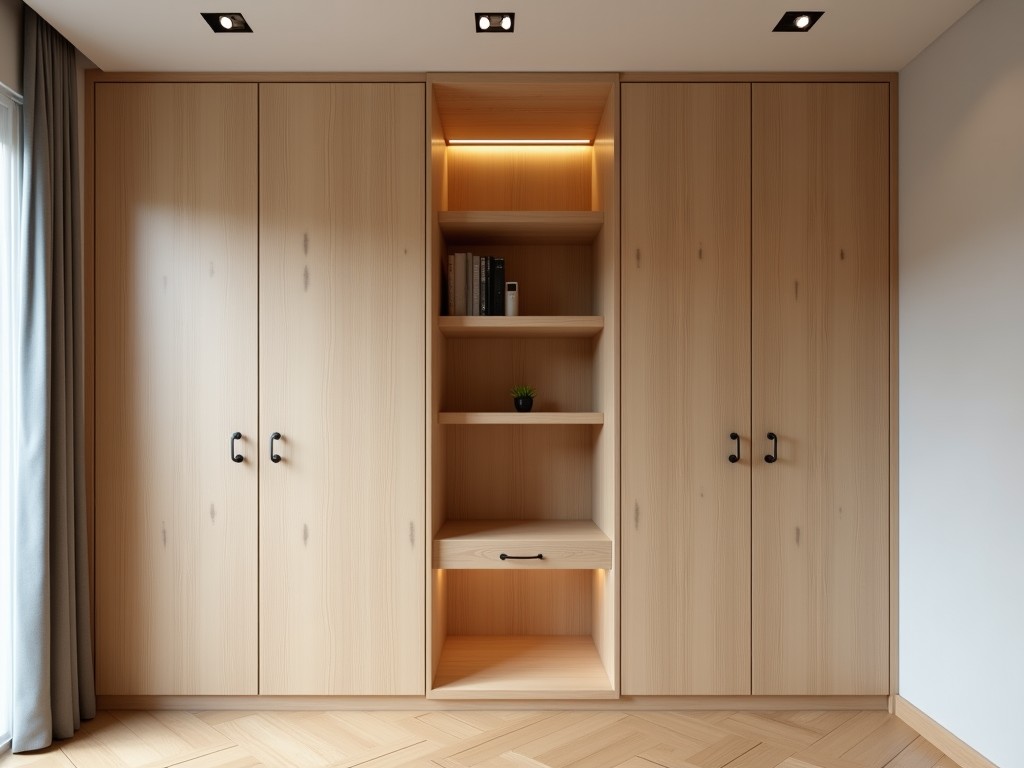
Corner Balcony Storage Cabinet
Corner balcony storage cabinets are engineered to maximize usable space in confined outdoor areas while providing secure, weather-resistant storage for tools, maintenance equipment, and seasonal
- Category:
- Aluminum Alloy Balcony Cabinet
Corner Balcony Storage Cabinet
Corner balcony storage cabinets are engineered to maximize usable space in confined outdoor areas while providing secure, weather-resistant storage for tools, maintenance equipment, and seasonal items. Unlike standard rectangular units, these cabinets utilize the often-underused corner geometry of balconies, terraces, or small patios, converting dead space into functional storage without compromising traffic flow or aesthetic integration. Their design addresses the specific spatial constraints of urban residential and light commercial outdoor environments where floor area is limited but storage demand remains consistent.
Structural Configuration and Space Efficiency
The core structural advantage lies in the triangular or quarter-circle footprint that conforms to a 90-degree corner, typically ranging from 600mm to 900mm per leg depending on model series. This configuration reduces floor penetration by up to 40% compared to equivalent-volume rectangular cabinets while maintaining internal volume through optimized internal shelving angles and vertical partitioning. The cabinet body is constructed with a 1.2mm galvanized steel frame, powder-coated for corrosion resistance, and joined using blind rivets and structural adhesives to eliminate exposed fasteners that could compromise weather sealing.
Internal depth is maintained at a minimum of 450mm to accommodate standard tool cases and cleaning supplies, while the front facade incorporates a 15-degree inward taper to prevent interference with balcony railings or sliding door tracks. Wall mounting is achieved through four M8 anchor points distributed across the rear panel, with load ratings verified to 150kg static load when installed into concrete or reinforced masonry substrates. The door assembly uses concealed hinges with 110-degree opening angle and magnetic catch systems to ensure positive closure under wind loads up to 110 km/h.
Material Selection and Environmental Resistance
Primary construction uses hot-dip galvanized steel (Z275 coating) for all structural components, providing a baseline corrosion resistance of 500 hours in salt spray testing per ASTM B117. Exterior panels are finished with a two-layer powder coating system: epoxy primer for adhesion and UV-resistant polyester topcoat, rated for 1500 hours of QUV exposure without chalking or cracking exceeding Grade 2 per ASTM D4587. This combination ensures suitability for coastal, industrial, and high-UV environments where standard painted steel would degrade within 12–18 months.
For applications requiring enhanced chemical resistance or aesthetic customization, optional marine-grade 316 stainless steel (1.5mm thickness) is available for the cabinet body, particularly suited for poolside, chemical storage, or food-adjacent balcony installations. Interior shelves use 0.8mm perforated steel with 6mm diameter holes arranged in a 15mm grid pattern, promoting airflow while supporting loads up to 25kg per shelf. All rubber seals and gaskets are EPDM compound, rated for -30°C to +80°C continuous operation and UV-stabilized to prevent cracking over 5-year outdoor exposure.
Functional Features and Operational Considerations
Access is facilitated through a single hinged door with optional left- or right-hand configuration specified at order, allowing adaptation to balcony layout constraints. The door incorporates a multi-point locking system with a cylinder lock (EN 1303 Grade 2) and anti-drill plate, securing against unauthorized access while maintaining operability with gloved hands. Ventilation is passive, achieved through two 10mm diameter corrosion-resistant vents positioned high and low on opposing sides to create natural convection without compromising water ingress resistance (rated IP44 per IEC 60529).
Interior lighting is not standard due to power constraints in balcony settings, but optional battery-operated LED strips with motion activation can be integrated upon request, powered by rechargeable lithium-ion packs with 6-month autonomy. The cabinet base includes adjustable leveling feet (±15mm range) to compensate for uneven balcony surfaces, preventing door misalignment and water pooling. Drainage channels are molded into the base flange to direct incidental water away from the interior cavity, reducing condensation buildup during temperature cycling.
Customization and Integration Flexibility
Standard models are available in three footprint sizes: Small (700x700mm leg), Medium (800x800mm leg), and Large (900x900mm leg), each with a fixed height of 900mm to align with typical balcony railing heights and prevent visual obstruction. Custom dimensions are achievable through modular panel fabrication, allowing leg lengths to be adjusted in 50mm increments between 600mm and 1000mm, and height modifications from 750mm to 1200mm, subject to structural validation for wind load and deflection limits.
Finish options extend beyond standard RAL colors to include textured coatings (sand, hammered), wood-grain transfers for architectural matching, and anti-graffiti clear coats for public-access balconies. Internal accessories such as tool hooks, fold-down work shelves, and removable bins can be specified during quotation, with mounting points pre-installed on the interior panels. For OEM integrations, the cabinet can be supplied as a knock-down kit with pre-drilled assembly points and detailed torque-controlled installation instructions to ensure field consistency.
Quality Control and Manufacturing Consistency
Production follows a standardized process: laser-cutting of blanks, CNC bending to ±0.5mm tolerance, robotic welding for seam consistency, and automated powder coating with thickness monitoring (60–80μm dry film). Each unit undergoes hydrostatic testing at 0.5 bar for 10 minutes to validate seal integrity, followed by functional cycling of the door mechanism (5000 open/close operations) to verify hinge and latch performance. Final inspection includes dimensional verification against CAD models, adhesion testing (cross-hatch per ASTM D3359), and visual assessment for coating uniformity under 500 lux illumination.
Material traceability is maintained via batch numbers linked to coil certificates, and all steel suppliers are ISO 9001 and ISO 14001 certified. Packaging uses triple-wall corrugated cardboard with corner protectors and internal bracing to withstand 1.2m drop tests per ISTA 3A. Units are shipped flat-packed to reduce volume, with assembly requiring no more than 45 minutes using standard hand tools (hex keys, screwdriver, level). No specialized training is required, reducing installation risk and variability across distributors or end-users.
| Parameter | Typical Value | Notes |
|---|---|---|
| External Footprint (Leg Length) | 600–1000 mm | Customizable in 50 mm increments |
| Internal Height | 750–1200 mm | Subject to structural validation |
| Internal Depth | 450 mm (min) | Accommodates standard tool cases |
| Shelf Load Capacity | 25 kg per shelf | Uniformly distributed load |
| Wind Load Resistance | 110 km/h | With magnetic door catch engaged |
| Corrosion Resistance (Steel) | 1500 h QUV | Polyester topcoat over epoxy primer |
| Ingress Protection | IP44 | Protected against splashing water |
| Static Load Rating (Wall-Mounted) | 150 kg | Into concrete or reinforced masonry |
Typical Applications and Environmental Suitability
These cabinets are commonly specified in high-density residential developments where balcony space is premium and storage needs include gardening tools, pool maintenance equipment, or emergency supplies. In light commercial settings such as cafes or boutique hotels with outdoor seating, they securely hold cleaning agents, cushion storage, or seasonal decor without encroaching on customer space. The IP44 rating and corrosion-resistant construction make them suitable for coastal apartments, poolside terraces, and urban environments with high pollution levels where lower-grade alternatives would show surface degradation within two years.
Industrial facilities with limited outdoor maintenance zones — such as rooftop HVAC servicing areas or small-scale manufacturing balconies — use these units to store PPE, calibration tools, or spill kits within arm’s reach of work zones, reducing retrieval time and improving compliance with safety protocols. The optional 316 stainless steel variant is particularly valuable in food processing adjunct areas or chemical storage zones where exposure to cleaning agents or mild acids necessitates superior material resistance. Their low visual profile and corner placement also satisfy architectural review boards in historic districts where bulky storage solutions are restricted.
For temporary installations such as event venues or construction site offices, the knock-down format allows rapid deployment and removal without permanent anchoring, though wall mounting is recommended for sustained use. The modular design enables ganging of multiple units in L- or U-configurations along balcony perimeters when linear storage is preferred, though corner units remain optimal for maximizing unused angular space. Specifiers should evaluate local wind load codes (e.g., ASCE 7-22) and substrate conditions when selecting anchorage methods, particularly in high-rise applications where suction loads may exceed standard ratings.



