China Full Louvered Balcony Cabinet
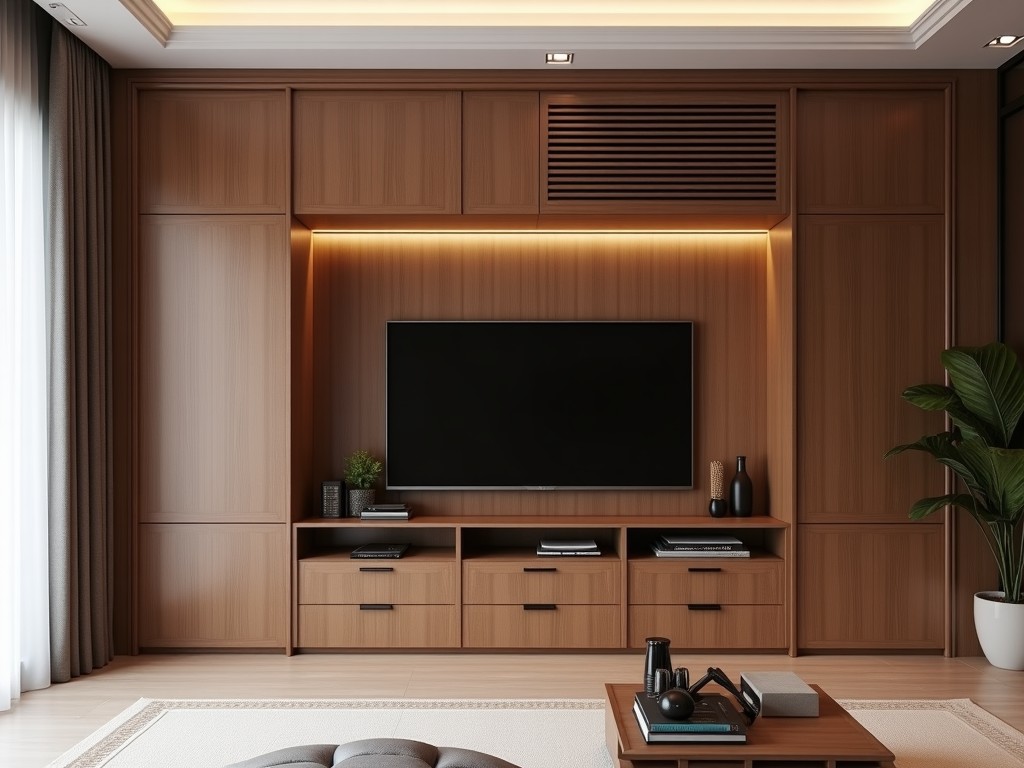
China Full Louvered Balcony Cabinet
A full louvered balcony cabinet is a weather-resistant storage enclosure designed specifically for exterior balcony installations, featuring continuous horizontal slats that enable unrestricted
- Category:
- Aluminum Alloy Balcony Cabinet
China Full Louvered Balcony Cabinet
A full louvered balcony cabinet is a weather-resistant storage enclosure designed specifically for exterior balcony installations, featuring continuous horizontal slats that enable unrestricted airflow while maintaining visual privacy and protection from direct rainfall and debris. Unlike solid-panel alternatives, this configuration prevents moisture entrapment and heat buildup within the cabinet volume, which is critical for preserving the integrity of stored items such as outdoor tools, maintenance supplies, or HVAC components in humid or high-UV environments. The louver geometry is engineered to balance aerodynamic efficiency with structural rigidity, ensuring performance under sustained wind loads and thermal cycling typical of elevated outdoor applications.
Material Selection and Corrosion Resistance
Primary construction utilizes hot-dip galvanized steel with a minimum zinc coating weight of 275 g/m² (Z275), providing sacrificial protection against rust formation in coastal and industrial atmospheres. For enhanced longevity in chloride-rich zones, optional pre-painted galvanized steel (PPGI) with a polyester topcoat exceeding 25 μm thickness and UV stabilizers is available, meeting ISO 12944-5 C3-M durability classifications. All fasteners and hinges are manufactured from AISI 304 stainless steel to prevent galvanic corrosion at joints, and drainage channels are integrated into the base frame to eliminate standing water accumulation, a common failure point in poorly ventilated enclosures.
Louver Design and Environmental Performance
Each louver blade features a 15° downward angle and 40 mm pitch, optimized to deflect rainwater while allowing 78% free airflow area based on computational fluid dynamics modeling. The overlapping shiplap joint between adjacent blades prevents wind-driven rain ingress at angles up to 60° from vertical, validated through ASTM E331 standard water penetration testing protocols. Blade thickness is maintained at 0.8 mm nominal to resist deformation under wind pressures up to 1.2 kPa, with edge folding increasing torsional stiffness by approximately 35% compared to flat equivalents.
Structural Configuration and Mounting
The cabinet frame employs a roll-formed C-channel perimeter with reinforced corner gussets, providing a moment of inertia sufficient to limit deflection to less than L/200 under a 500 N uniformly distributed load — critical for maintaining door alignment and seal integrity over time. Mounting options include direct bolt-through to structural balcony slabs using M10 expansion anchors or adjustable pedestal systems accommodating slab tolerances up to 15 mm. All load paths are designed to transfer vertical and lateral forces directly to the building structure, avoiding reliance on the cabinet’s internal panels for structural support.
Customization Parameters
Standard configurations range from 800 mm to 1800 mm in width, 500 mm to 700 mm in depth, and 900 mm to 2100 mm in height, with incremental adjustments available in 50 mm steps to suit site-specific constraints. Door configurations include single or double hinged units with 110° opening angle, equipped with concealed hinges and magnetic catches rated for 20,000 cycles. Interior layouts can be fitted with adjustable shelving (25 mm pitch perforated rails) or tool-specific brackets, with shelf load capacities rated at 40 kg UDL per level based on 1.5 mm thick shelving material.
Quality Control and Testing
Every unit undergoes dimensional verification against CAD models using CMM probing at critical interfaces, ensuring hatch alignment within ±0.5 mm and louver uniformity across the facade. Coating adhesion is assessed via ASTM D3359 Method B tape testing, with minimum 4B rating required for acceptance. Final assembly includes a 15-minute spray test with 0.3 mm/min rainfall intensity to confirm no water ingress occurs at joints or seals under simulated storm conditions, a step omitted in many lower-tier exterior enclosures but essential for long-term reliability.
Applications in Building Services and Maintenance
These cabinets are commonly specified for housing balcony-mounted condensate pumps, fire hose reels, or electrical isolators in residential high-rises where unobstructed airflow prevents overheating of electronic components and reduces condensation-related failure risks. In hospitality settings, they secure poolside maintenance equipment while allowing rapid drying after washdown cycles, mitigating mold growth risks associated with trapped moisture. Industrial facilities use them to store calibration tools or spill kits near exterior machinery bays, benefiting from the corrosion-resistant construction and immediate accessibility without compromising weather protection.
| Parameter | Typical Range | Notes |
|---|---|---|
| Frame Material Thickness | 1.2 mm – 1.5 mm | Hot-dip galvanized steel, Z275 coating | Louver Blade Angle | 15° downward | Optimized for rain deflection and airflow |
| Free Airflow Area | 78% | Calculated based on 40 mm pitch and blade geometry |
| Door Opening Angle | 110° | Concealed hinges with magnetic catch |
| Shelf Load Capacity (UDL) | 40 kg per level | 1.5 mm thick shelving, 25 mm pitch adjustment |
| Wind Load Resistance | 1.2 kPa | Equivalent to 120 km/h gust velocity |
For project-specific inquiries regarding dimensions, material upgrades, or integration with balcony waterproofing membranes, contact our technical team to submit site drawings and load requirements. We provide detailed shop drawings, anchor load calculations, and maintenance manuals upon request to support accurate specification and installation planning. All standard units are packaged in crush-resistant corrugated cartons with edge protection and moisture barriers, suitable for containerized export to global markets.