China Designer Aluminum Balcony Cabinet
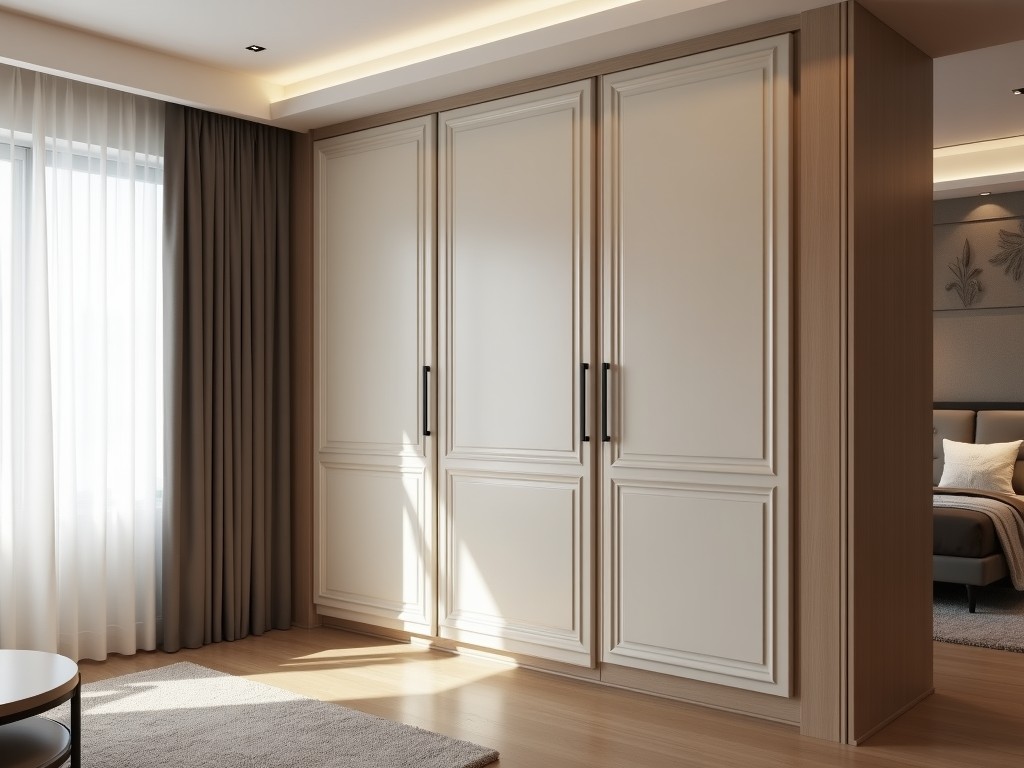
China Designer Aluminum Balcony Cabinet
Outdoor balcony storage requires materials that resist corrosion, UV exposure, and thermal cycling while maintaining dimensional stability under load. Aluminum alloys offer a favorable
- Category:
- Aluminum Alloy Balcony Cabinet
China Designer Aluminum Balcony Cabinet
Outdoor balcony storage requires materials that resist corrosion, UV exposure, and thermal cycling while maintaining dimensional stability under load. Aluminum alloys offer a favorable strength-to-weight ratio and inherent oxidation resistance, making them suitable for exterior cabinetry in coastal or high-humidity climates. However, standard extrusions often lack the precision joinery and surface finishes needed for designer applications where aesthetics and long-term performance are equally critical.
Designer aluminum balcony cabinets integrate architectural detailing with functional storage, addressing both visual integration and practical utility in residential and commercial outdoor spaces. These units typically feature concealed hinges, drainage channels, and gasket-sealed doors to prevent water ingress while maintaining clean sightlines. The design process begins with load analysis—accounting for wind pressure, snow accumulation (where applicable), and dynamic loads from frequent use—to determine appropriate panel thicknesses and frame geometries.
Surface treatment significantly influences service life in outdoor environments. Anodizing creates a durable, translucent oxide layer that enhances corrosion resistance and allows for color integration without peeling or flaking. Powder coating provides thicker film builds for UV stability and custom color matching, though it requires careful edge coverage to avoid weak points. Both methods are evaluated based on salt spray test results (ASTM B117) and accelerated weathering cycles to predict real-world performance.
Material Selection and Alloy Considerations
Not all aluminum alloys are equally suited for exterior architectural applications. Alloy 6063 is commonly selected for extruded frames due to its excellent extrudability, smooth surface finish, and adequate mechanical properties (typical tensile strength: 145–240 MPa, yield strength: 95–180 MPa). For structural components requiring higher strength—such as load-bearing brackets or corner reinforcements—6061-T6 may be specified (tensile strength: 290–310 MPa, yield strength: 240–275 MPa), though it demands more precise machining and welding techniques.
Marine-grade alloys like 5052 or 5083 offer superior resistance to salt-induced pitting but are less common in standard extrusion profiles due to higher cost and reduced formability. Their use is typically limited to custom-fabricated elements in high-exposure zones. Material selection balances corrosion resistance, fabricability, cost, and mechanical requirements, with mill test certificates verifying composition and temper for each production lot.
Thermal expansion must be accommodated in long-span installations. Aluminum expands approximately 23.5 µm/m·°C, meaning a 2-meter cabinet can shift over 0.5 mm per degree Celsius change. Designers incorporate slip joints, floating panels, or flexible gaskets to prevent stress buildup that could warp frames or compromise seals over time.
Construction Methods and Joinery Techniques
Joinery method directly affects structural integrity, thermal bridging, and long-term durability. Mechanical fasteners—such as stainless steel screws or rivets—provide disassembly capability but create potential leak paths if not properly sealed. Welded joints eliminate fastener holes but require post-weld treatment to restore the oxide layer and prevent galvanic corrosion at the heat-affected zone.
Interlocking extrusion designs, such as tongue-and-groove or snap-lock systems, allow for fastener-free assembly while maintaining alignment and sealing integrity. These systems rely on precise tolerances (±0.1 mm) during extrusion and are often combined with structural adhesives or compressible gaskets for enhanced weather resistance. Corner joints may use internal splines or die-cast aluminum connectors to distribute load and conceal fasteners.
Hidden hinge systems are critical for maintaining clean aesthetics. European-style concealed hinges, typically made from zinc alloy or stainless steel, allow for 3-dimensional adjustment (depth, height, side) and support door weights up to 25 kg per pair. They are mounted within the frame profile to avoid visual interruption and are paired with magnetic catches or compression latches for secure closure without exposed hardware.
Surface Finishing and Weather Resistance
Anodizing thickness directly correlates with corrosion resistance in aggressive environments. Standard clear anodize (10–15 µm) suits mild urban conditions, while 25 µm or thicker coatings are recommended for coastal or industrial zones. Color anodizing involves dye infusion into the porous oxide layer before sealing, offering UV-stable hues that do not fade like organic pigments. Seal quality—typically nickel acetate or cold-seal processes—determines resistance to staining and abrasion.
Powder coating provides uniform film thickness (typically 60–100 µm) and excellent edge coverage when applied via electrostatic spray and cured at 180–200°C. Super durable polyester powders offer enhanced UV resistance (up to 5–7 years retention of gloss and color in southern climates), while fluoropolymer-based powders (e.g., FEVE) extend this to 10+ years but at higher cost. Pretreatment is critical: alkaline cleaning, rinsing, and chromate-free conversion coating (e.g., zirconium-based) ensure adhesion and prevent underfilm corrosion.
Both finishes undergo quality verification: coating thickness via magnetic induction or eddy current probes, adhesion via cross-hatch test (ASTM D3359), and hardness via pencil scratch test. Salt spray exposure (ASTM B117) for 1,000+ hours with <10% red rust rating is a common benchmark for exterior architectural applications.
Design Customization and Functional Features
Balcony cabinets must adapt to site-specific constraints: irregular parapets, varying rail heights, and limited depth projections. Customization begins with precise site measurements—accounting for protrusions, drain locations, and clearance for door swing—or through templating for curved or angled installations. Frame depth typically ranges from 200 mm to 350 mm, balancing storage capacity with balcony egress requirements.
Interior organization is adjustable: removable shelves (supported by pin-and-hole systems or adjustable brackets), vertical dividers for tall items, and pull-out trays for frequent-use tools. Shelves are often perforated or slotted to allow drainage and airflow, reducing moisture retention. Load capacity per shelf is typically 20–30 kg, depending on material thickness and support spacing.
Ventilation is essential to prevent condensation buildup. Passive vents—laser-cut slots or mesh panels—are placed at top and bottom to promote convection without compromising water resistance. In humid climates, hygrostat-controlled micro-fans (low-voltage, IP-rated) may be integrated for active moisture management, powered by solar panels or building circuits.
Lighting improves usability: LED strips (IP67-rated, 12V or 24V) with motion sensors or dusk-to-dawn controllers provide ambient or task lighting. Wiring is routed through internal conduits to maintain weatherproofing, with quick-disconnect connectors for maintenance access.
| Feature | Typical Specification | Customizable Options |
|---|---|---|
| Frame Alloy | 6063-T5 | 6061-T6, 5052, 5083 (per project) |
| Panel Thickness | 1.2–2.0 mm | Up to 3.0 mm for high-load zones |
| Surface Finish | Clear Anodize (15 µm) | Color Anodize, Powder Coat (60–100 µm), Wood Grain Sublimation |
| Door Configuration | Single or Double Hinged | Sliding, Lift-Up, Bi-Fold (track-dependent) |
| Hardware | Stainless Steel Hinges, Magnetic Catch | Soft-Close Hinges, Key Lock, Combination Latch, IP-Rated Handle |
| Interior Accessories | Adjustable Shelves (2 pcs) | Pull-Out Trays, Dividers, LED Lighting, Ventilation Fans, Power Outlet (IP44) |
| Sealing System | EPDM Gasket, Drainage Channels | Silicone Gasket, Brush Seals, Raised Threshold |
| Mounting Method | Surface-Mounted Brackets | Recessed Frame, Post-Mounted, Rail-Clamp System |
Quality Control and Testing Protocols
Dimensional accuracy is verified at multiple stages: after extrusion (±0.2 mm tolerance for critical interfaces), post-fabrication (±0.5 mm for overall dimensions), and pre-shipment. Coordinate measuring machines (CMM) or digital calipers assess hole alignment, squareness, and parallelism to ensure proper door operation and sealing compression. Warpage is checked using feeler gauges across reference planes, with acceptable limits typically <0.5 mm per meter.
Finish quality is assessed under standardized lighting (D65, 500 lux) for color consistency and gloss uniformity. Adhesion testing follows ASTM D3359 Method B (tape test), requiring 4B or better rating (≤5% coating removal). Impact resistance is evaluated via falling ball test (ASTM D2794) or Gardner impact tester to ensure coating integrity under mechanical stress.
Functional testing includes door cycle endurance (5,000+ open/close operations with 5 kg load), water spray testing (IPX4 or IPX5 rating), and dust ingress protection (IP5X). Load testing applies static weights to shelves and bases (e.g., 50 kg uniform load) to verify deflection limits (L/200 or <10 mm). All test results are documented per batch and available upon request.
Packaging and Logistics for Export
Aluminum cabinets are susceptible to edge damage and surface scratching during transit. Primary protection involves wrapping each unit in polyethylene foam (2–3 mm thick) or corrugated plastic sheets, focusing on corners and protruding hardware. Secondary packaging uses double-wall corrugated cardboard boxes with edge protectors and internal bracing to prevent shifting.
For LCL (less than container load) shipments, units are stacked on heat-treated fumigated pallets (ISPM 15 compliant) with corner boards and stretch wrap to stabilize the load. FCL (full container load) shipments may use custom-designed racking systems to maximize density while minimizing handling. Desiccant packets (silica gel or clay) are included to control humidity inside packaging during sea freight.
Labeling includes handling symbols (This Side Up, Fragile, Keep Dry), weight markings, and QR codes linking to packing lists and installation manuals. Carton dimensions are optimized for standard pallet sizes (1,100 × 1,100 mm or 1,200 × 1,000 mm) to improve warehouse efficiency. Documentation includes commercial invoice, packing list, certificate of origin, and material safety data sheets (MSDS) for finishes.
For technical inquiries, customization requests, or project-specific quotations, please provide your detailed requirements including dimensions, environmental exposure, finish preferences, and any integrated features (e.g., lighting, ventilation, locking systems). Our engineering team will review your specifications and respond with a comprehensive proposal, including lead time, packaging options, and compliance documentation.
Submit Inquiry