China Balcony Cabinet Manufacturer
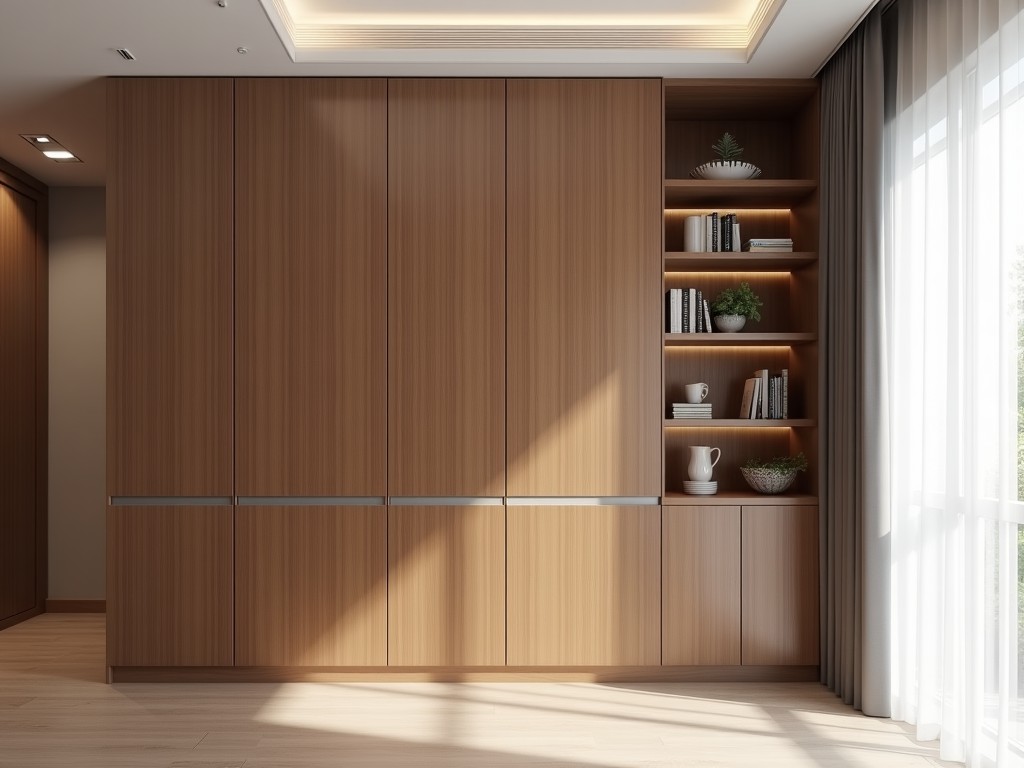
China Balcony Cabinet Manufacturer
Balcony cabinets serve as essential storage solutions in residential and commercial outdoor spaces, requiring resistance to UV exposure, moisture, and temperature cycling. Manufacturers in China
- Category:
- Aluminum Alloy Balcony Cabinet
China Balcony Cabinet Manufacturer
Balcony cabinets serve as essential storage solutions in residential and commercial outdoor spaces, requiring resistance to UV exposure, moisture, and temperature cycling. Manufacturers in China produce these units using engineered materials and modular designs to meet international durability standards while accommodating regional climatic variations. This page outlines the technical considerations, material options, and production capabilities involved in sourcing balcony cabinets from Chinese manufacturers.
Material Selection for Outdoor Durability
The longevity of balcony cabinets depends on material resistance to environmental stressors. Common substrates include marine-grade plywood with phenolic resin coating, aluminum alloys (6063-T5), and UV-stabilized polypropylene composites. Each material undergoes specific treatments: plywood is sealed with water-based epoxies, aluminum is powder-coated or anodized to 15–25 μm thickness, and composites incorporate carbon black UV inhibitors at 2–3% loading. These treatments reduce surface degradation by 40–60% compared to untreated equivalents under accelerated weathering tests (ASTM G154).
Structural Design and Load Considerations
Balcony cabinets must support static loads from stored items and dynamic forces from wind or seismic activity. Standard designs incorporate reinforced corners with gussets or internal bracing to resist racking. Shelves are typically rated for 20–30 kg/m² uniformly distributed load, with deflection limits under L/180 per ANSI/BIFMA X5.6. Wall-mounting systems use stainless steel brackets (A2-70) with pull-out resistance exceeding 1.5 kN per anchor point. Drainage slopes of 2–3° are integrated into cabinet bases to prevent water pooling.
Customization Capabilities
Manufacturers accommodate project-specific requirements through modular design platforms. Dimensions, hardware, and finishes can be adjusted without redesigning core structural elements. Common customization paths include:
- Width adjustments in 50 mm increments from 400 mm to 1200 mm
- Height options: 800 mm (standard), 1000 mm (tall), or 600 mm (low-profile)
- Door types: swing, slide, or lift-up with soft-close dampers (rated for 50,000 cycles)
- Ventilation: passive louvers or active fans with IP44 rating
- Lighting: LED strips with motion sensors, powered via low-voltage DC
Quality Control and Testing Protocols
Production quality is verified through in-process and final inspections. Dimensional tolerances are maintained within ±1.5 mm for critical fit surfaces. Finish adhesion is tested via cross-hatch (ASTM D3359) requiring minimum 4B rating. Salt spray resistance (ASTM B117) is validated at 500 hours for coated aluminum and 1000 hours for stainless steel hardware. Functional testing includes 5000 open/close cycles for hinges and slides, with wear debris analysis to confirm lubricant efficacy. All test records are retained for traceability.
Packaging and Logistics Optimization
To minimize damage during transit, cabinets are packaged using corner protectors, edge guards, and moisture-barrier wraps. Flat-pack designs reduce volume by 40–60% compared to assembled units, lowering freight costs. Internal bracing within pallets limits vibration transmission to under 0.5 g RMS. Export shipments include ISPM-15 compliant wooden pallets or reusable plastic skids. Desiccant packs (50g per m²) are included to control humidity during sea freight, maintaining internal RH below 60%.
Typical Production Lead Times
Lead times vary based on material availability, complexity, and order volume. Standard configurations from stock materials typically require 15–20 working days. Custom finishes or non-standard hardware may extend this to 25–35 days. Expedited options are available for critical projects, reducing lead time to 10–12 days with priority scheduling. These estimates assume final approved drawings and payment terms are confirmed before production begins.
Applications in Residential and Commercial Settings
Balcony cabinets are selected based on spatial constraints and usage patterns. In high-rise apartments, narrow-depth units (300 mm) maximize floor space while storing gardening tools or outdoor cushions. In hospitality settings, wider cabinets (900–1200 mm) with internal dividers support poolside inventory management. Commercial installations often require integrated power outlets and data ports for electronic device charging, necessitating UL-certified internal wiring channels. The choice between wall-mounted and freestanding models depends on load-bearing capacity of the balcony slab and local building codes.
| Parameter | Typical Value | Notes |
|---|---|---|
| Material Thickness (Panels) | 16–18 mm | Plywood or composite core |
| Coating Adhesion | 4B (ASTM D3359) | Minimum acceptable rating |
| Shelf Load Capacity | 25 kg/m² | Uniformly distributed |
| Hinge Cycle Life | 50,000 cycles | With soft-close damper |
| Salt Spray Resistance | 500–1000 hours | Dependent on substrate and coating |
Environmental and Safety Compliance
Manufacturing processes adhere to REACH and RoHS restrictions on hazardous substances. Formaldehyde emissions from composite panels are maintained below 0.05 ppm (EN 717-1), qualifying for E1 classification. Powder coatings are VOC-free, with transfer efficiency exceeding 65% to reduce waste. Electrical components in illuminated or powered cabinets meet IEC 60598-2-21 for outdoor luminaires. End-of-life recyclability is designed into material selection, with aluminum and steel components separable for recycling streams.
Request for Quotation Requirements
To generate an accurate quotation, manufacturers require the following technical inputs:
- Exact dimensions (width, height, depth) and mounting configuration
- Material preference or environmental exposure level (e.g., coastal, inland)
- Hardware specifications: hinge type, lock requirements, handle style
- Finish details: color code (RAL/Pantone), texture (matte, gloss, textured)
- Additional features: lighting, ventilation, power outlets, internal shelving layout
- Order quantity and delivery timeline
- Destination port or address for freight calculation
Providing CAD drawings or 3D models significantly reduces quotation turnaround time and minimizes interpretation errors. Changes requested after design freeze may incur engineering revision fees.
For technical consultations, sample requests, or project-specific inquiries, contact our engineering team to discuss your balcony storage requirements.
Submit Inquiry


