Built In Washer Dryer Cabinet
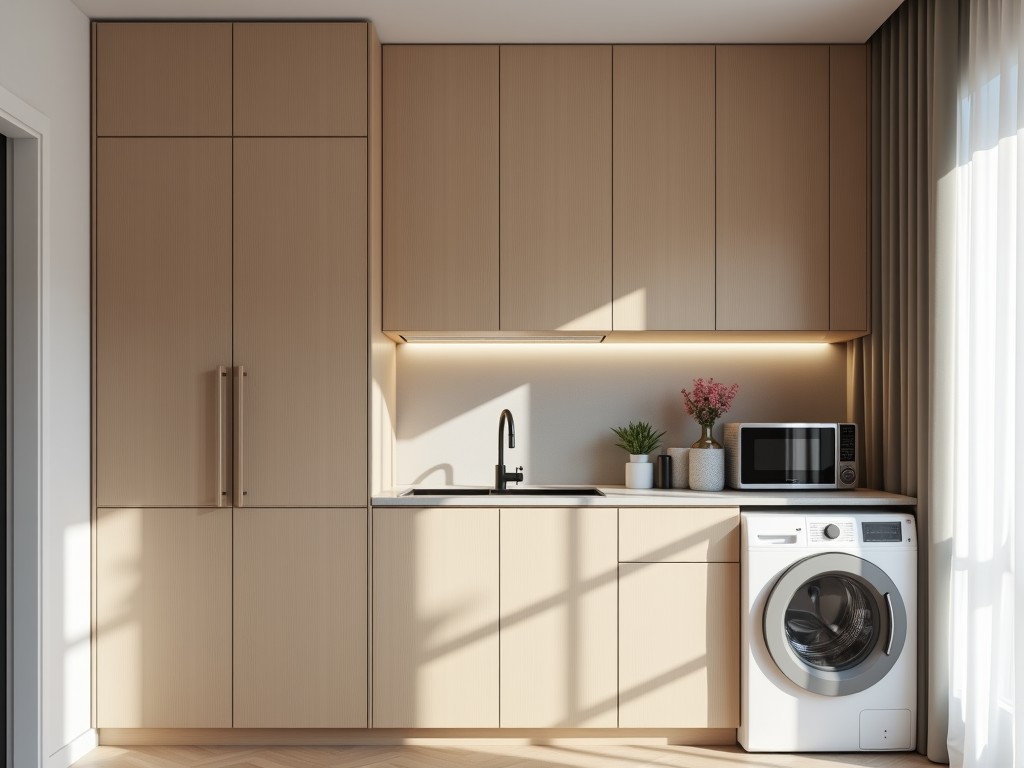
Built In Washer Dryer Cabinet
A built-in washer dryer cabinet integrates laundry appliances into a structured enclosure designed for commercial and industrial facilities. It provides a contained environment that protects
- Category:
- Aluminum Alloy Balcony Cabinet
Built-in Washer Dryer Cabinet
A built-in washer dryer cabinet integrates laundry appliances into a structured enclosure designed for commercial and industrial facilities. It provides a contained environment that protects equipment from dust, moisture, and physical impact while maintaining accessibility for service and operation. The cabinet is engineered to support standard residential or light commercial washer and dryer units, typically with front-loading configurations, and is constructed from materials suitable for continuous operation in demanding settings.
Installation of a built-in washer dryer cabinet begins with precise dimensional planning to accommodate the specific appliance models, including clearance for door swing, ventilation, and utility connections. The cabinet frame is assembled using welded or bolted steel components, ensuring structural rigidity under dynamic loads generated during spin cycles. Internal surfaces are finished to resist corrosion and facilitate cleaning, with options for powder-coated steel, stainless steel, or high-density polymer liners depending on the facility’s hygiene and durability requirements.
Ventilation is a critical design consideration in built-in washer dryer cabinets. Adequate airflow must be maintained to dissipate heat generated by the dryer and prevent moisture buildup that could lead to mold or electrical issues. Ventilation systems typically include louvered panels, ducted exhaust paths, or passive air gaps sized according to the appliance’s BTU output and manufacturer specifications. In high-humidity environments, active ventilation with low-noise fans may be integrated to ensure consistent performance.
Utility access points are pre-engineered to align with standard plumbing and electrical configurations. Water supply lines, drain connections, and power conduits are routed through sealed grommets or conduit plates to maintain the cabinet’s integrity while allowing for quick disconnection during maintenance. The cabinet interior includes mounting brackets or adjustable rails to secure the appliances, minimizing vibration transfer to the surrounding structure and reducing noise transmission in adjacent spaces.
Material selection for the cabinet is driven by the operational environment. In healthcare, food processing, or laboratory settings, stainless steel (typically 304 or 316 grade) is preferred for its resistance to cleaning agents and microbial growth. In warehouses or light industrial facilities, powder-coated cold-rolled steel offers a cost-effective balance of durability and appearance. Interior liners may use HDPE or PVC panels to prevent water damage and simplify cleaning after spills or leaks.
Load-bearing capacity is a key specification, particularly when the cabinet is installed in multi-story buildings or on elevated platforms. The frame is designed to support the combined static and dynamic weight of the washer and dryer, including water retention during wash cycles and the shifting mass during spin. Typical load ratings range from 150 to 250 kg, depending on the cabinet size and reinforcement design, with deflection limits set to prevent misalignment of appliance doors or drum seals.
Customization options allow the cabinet to adapt to specific facility layouts and workflow requirements. Dimensions can be adjusted to accommodate non-standard appliance sizes or to stack units vertically in space-constrained areas. Additional features include integrated folding counters, storage drawers for detergents, locking mechanisms for security, and access panels for internal plumbing inspections. Finish options range from matte to textured coatings to match surrounding millwork or equipment.
In multi-unit residential buildings, hotels, or dormitory facilities, built-in washer dryer cabinets improve space utilization and reduce maintenance interference. By enclosing the appliances, the cabinet contains lint, water splashes, and operational noise, contributing to a cleaner and quieter environment. The structured enclosure also deters unauthorized use or tampering, which is valuable in shared laundry rooms where equipment security is a concern.
Quality control during manufacturing includes dimensional verification of cutouts, alignment checks for mounting hardware, and finish adhesion testing. Each cabinet undergoes a functional test with simulated loads to verify stability and vibration damping. Electrical continuity and grounding are validated where applicable, and all edges are deburred to prevent injury during handling or use.
Packaging for shipment uses corner protectors, edge guards, and stretch wrapping to prevent damage during transit. Cabinets are typically shipped flat-pack or partially assembled to optimize pallet density, with assembly instructions and hardware included. For export shipments, moisture-barrier packaging and ISPM-15 compliant pallets are available upon request to meet international shipping standards.
Typical Specifications
| Parameter | Typical Value | Notes |
|---|---|---|
| External Width | 600–700 mm | Matches standard 60 cm appliance width |
| External Depth | 600–650 mm | Includes clearance for vent and connections |
| External Height (Single) | 850–950 mm | For side-by-side washer and dryer |
| External Height (Stacked) | 1700–1900 mm | Vertical stack configuration |
| Frame Material | Cold-rolled steel, stainless steel | Powder-coated or brushed finish |
| Load Capacity | 150–250 kg | Static + dynamic appliance weight |
| Ventilation Area | 100–150 cm² | Passive or active airflow |
| IP Rating (Optional) | IP44 | With sealed grommets and covers |
For facilities requiring a durable, code-compliant enclosure for laundry equipment, the built-in washer dryer cabinet offers a practical solution that combines protection, accessibility, and adaptability. Its design reduces installation complexity, minimizes long-term maintenance risks, and supports consistent appliance performance across varied operating conditions. To discuss dimensional customization, material options, or integration requirements for your specific application, please contact our technical team.