Balcony Pool Storage Cabinet Top Supplier
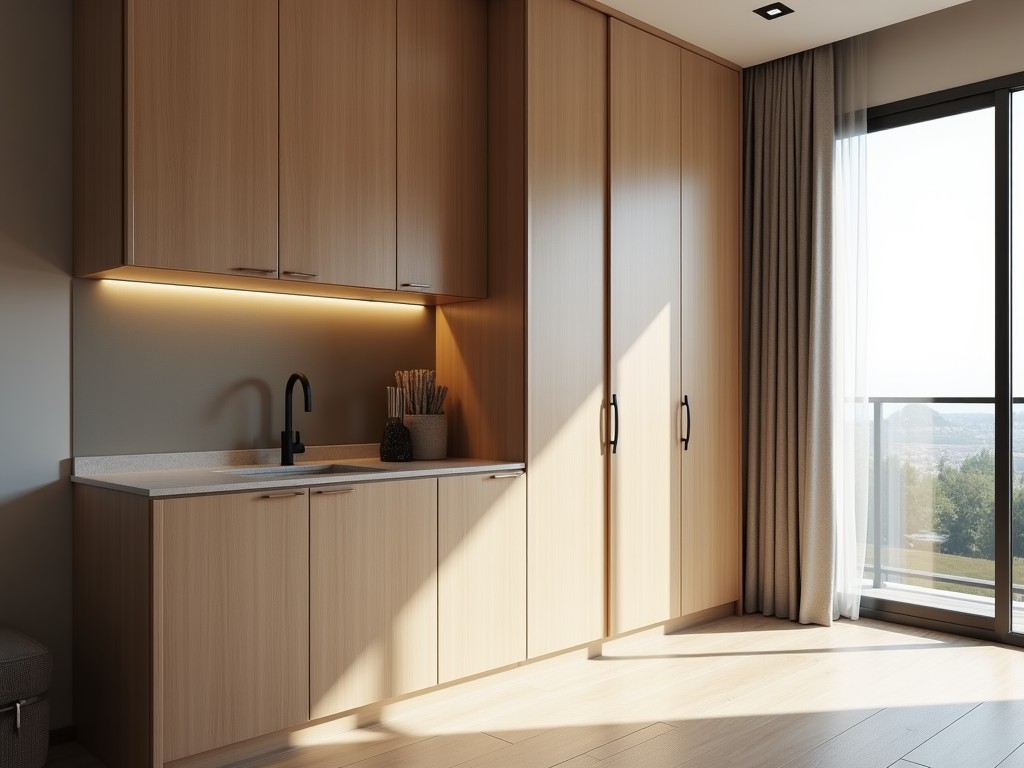
Balcony Pool Storage Cabinet Top Supplier
Selecting a storage cabinet for balcony pool applications requires understanding material behavior under cyclic thermal exposure, UV degradation, and chloride-induced corrosion. This guide details
- Category:
- Aluminum Alloy Balcony Cabinet
Balcony Pool Storage Cabinet: Technical Specifications and Selection Criteria
Selecting a storage cabinet for balcony pool applications requires understanding material behavior under cyclic thermal exposure, UV degradation, and chloride-induced corrosion. This guide details the engineering considerations that determine long-term performance in these demanding environments, focusing on measurable properties rather than subjective claims.
Material Selection for Chloride and UV Resistance
The primary failure modes in balcony pool storage are polymer embrittlement from UV radiation and electrochemical corrosion from salt-laden aerosols. Materials must be evaluated based on accelerated weathering test results (ASTM G154) and salt spray resistance (ASTM B117), not marketing labels. Polyethylene copolymers with hindered amine light stabilizers (HALS) typically retain >80% impact strength after 2000 hours of UV exposure, while standard polypropylene drops below 50% under identical conditions.
For metal components, 316 stainless steel is the minimum grade recommended for chloride-rich environments due to its molybdenum content, which increases pitting resistance equivalent number (PREN) to >24. Grade 304 stainless steel (PREN ~19) shows measurable pitting depth after 500 hours in 5% NaCl fog, making it unsuitable for direct splash zones. Aluminum alloys require anodized coatings >15µm thickness to achieve comparable corrosion resistance, though surface scratches compromise protection.
Structural Design Considerations for Wind and Load Cycles
Balcony installations face dynamic wind loads that induce cyclic stress on cabinet joints and mounting systems. Unlike static indoor storage, outdoor units must resist fatigue failure from daily thermal expansion (ΔT up to 40°C) and gust-induced vibration. The coefficient of linear thermal expansion (CTE) for HDPE is approximately 18×10⁻⁶/°C, meaning a 1-meter wide cabinet can expand/contract by 0.72mm per 20°C temperature shift—requiring sliding joints or flexible fasteners to prevent stress cracking.
Mounting systems should be designed for shear loads exceeding 500N per anchor point to account for sudden wind gusts (per ASCE 7-22 guidelines for Exposure Category C). Bolted connections with nylon-insert lock washers prevent loosening from vibration, while silicone-based sealants with Shore A hardness 25-35 maintain flexibility across -20°C to 80°C temperature ranges, avoiding bond failure due to thermal cycling.
Drainage and Ventilation Engineering
Water accumulation inside cabinets accelerates corrosion and promotes microbial growth. Effective drainage requires a minimum slope of 2° toward outlet points, with drain holes ≥6mm diameter to prevent clogging from debris or biofilm. Ventilation must achieve at least 2 air changes per hour to limit humidity buildup; passive vents should have a free area ratio of ≥5% of internal volume, positioned to create cross-flow without allowing direct rain ingress.
Internal condensation is modeled using dew point calculations based on ambient temperature and relative humidity. For example, at 30°C ambient and 70% RH, condensation forms on surfaces below 24°C. Cabinets stored in shaded balconies may remain below this threshold overnight, necessitating vapor-permeable liners (e.g., microporous polypropylene) that allow moisture transmission while blocking liquid water.
Comparison of Common Cabinet Constructions
| Construction Type | UV Stability (Hours to 50% Impact Loss) | Chloride Resistance (ASTM B117 Hours to Red Rust) | Thermal Expansion (mm/m/°C) |
|---|---|---|---|
| HDPE with HALS | >2000 | >1000 (no coating) | 18 |
| Standard PP | <800 | >1000 (no coating) | 16 |
| Powder-coated Steel | N/A (coating dependent) | 200-500 (if coating intact) | 12 |
| 316 Stainless Steel | N/A | >1000 | 16 |
Note: Values represent typical performance under accelerated testing. Actual service life depends on installation angle, cleaning frequency, and local pollutant levels. Powder-coated steel performance varies significantly with coating thickness and pretreatment quality—specify minimum 80µm epoxy primer + 120µm topcoat for marginal balcony use.
Customization Logic for Site-Specific Constraints
Balcony dimensions often impose strict width, depth, and height limits due to railings, overhangs, or door swing paths. Customization should begin with a site survey measuring three critical envelopes: maximum allowable footprint (width × depth), vertical clearance from floor to railing underside, and horizontal distance from wall to railing face. These dimensions determine whether a top-opening, front-access, or slide-out configuration is feasible without obstructing movement or violating building codes.
Internal layout must accommodate specific pool equipment dimensions—e.g., robotic cleaners require ≥400mm height clearance, while chemical containers need spill-resistant trays with ≥10mm lip height. Modular shelving systems with 25mm adjustment increments allow reconfiguration as equipment changes over time. Door swing direction should be chosen based on prevailing wind patterns to minimize rain ingress during opening; leeward-side hinges reduce water entry by up to 60% in coastal installations.
Quality Control Philosophy for Long-Term Performance
Reliability validation goes beyond dimensional inspection. Each production batch should undergo: (1) UV exposure cycling per ASTM G154 Cycle 6 (8h UV @ 60°C, 4h condensation @ 50°C) for 1000 hours, (2) salt fog exposure per ASTM B117 for 96 hours followed by drying and visual inspection for blisters or corrosion creep, and (3) thermal shock testing (−20°C to +60°C, 10 cycles, 30 min dwell) to validate joint integrity. Acceptance criteria: <5% gloss loss, no visible cracking, and <0.1mm corrosion penetration.
Material traceability is essential—suppliers must provide mill test reports for stainless steel and batch certificates for polymers showing HALS concentration ≥0.5% by weight. Random samples from each lot should be tested for melt flow index (MFI) to detect degradation during processing; MFI variation >20% from virgin material indicates excessive thermal history and reduced long-term stability.
For technical inquiries, material data sheets, or to discuss site-specific requirements for balcony pool storage solutions, contact our engineering team.
Request Technical Consultation