Balcony Laundry Storage Solution
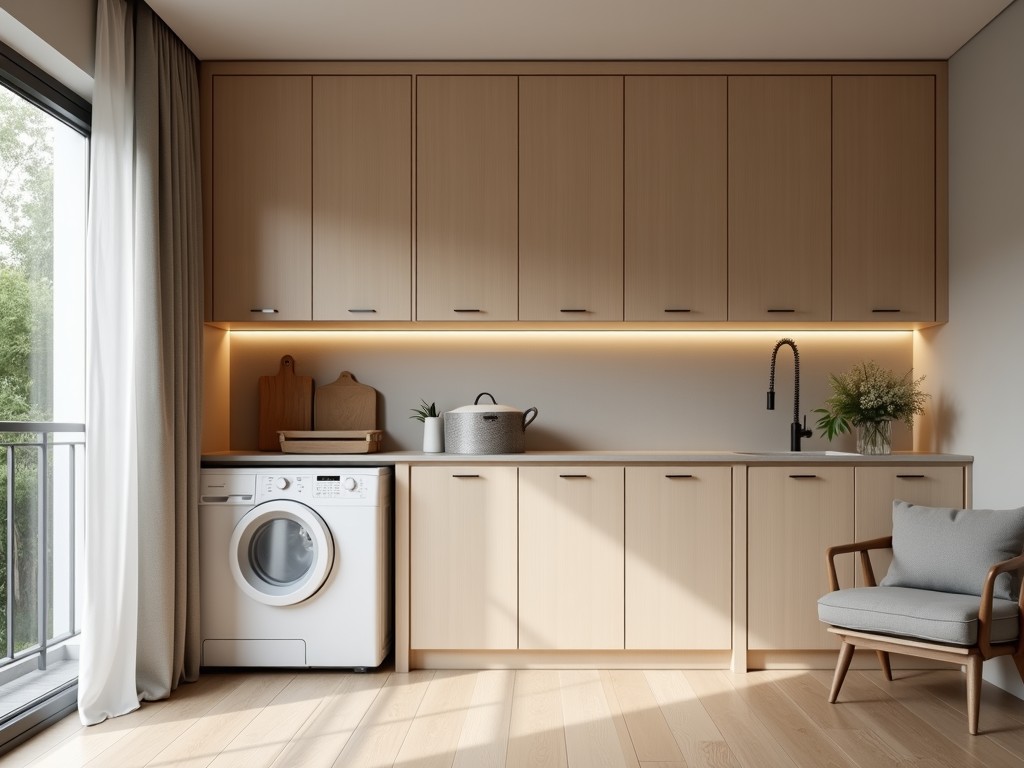
Balcony Laundry Storage Solution
Urban residential buildings increasingly incorporate balconies as functional extensions of living space, yet effective utilization for laundry activities remains constrained by environmental exposure
- Category:
- Aluminum Alloy Balcony Cabinet
Balcony Laundry Storage Solution
Urban residential buildings increasingly incorporate balconies as functional extensions of living space, yet effective utilization for laundry activities remains constrained by environmental exposure and spatial limitations. A purpose-built balcony laundry storage solution addresses these constraints through engineered design that protects textiles, detergents, and equipment from weather elements while optimizing limited floor area. This product page details the technical considerations, material selection criteria, and configuration options relevant to specifiers evaluating such systems for multi-unit residential developments.
Environmental Exposure Challenges
Balcony installations face direct exposure to ultraviolet radiation, precipitation, wind-driven particulates, and temperature fluctuations that degrade conventional storage materials. Prolonged UV exposure causes embrittlement in untreated polymers, while moisture ingress promotes corrosion in ferrous fasteners and mold growth on absorbent surfaces. Wind loads exceeding 110 km/h in elevated installations can dislodge inadequately secured units, creating safety hazards and property damage risks. These factors necessitate material selection and structural design specifically calibrated for exterior balcony conditions.
Material System Selection
Primary structural components utilize marine-grade aluminum alloy 6063-T5 with minimum yield strength of 210 MPa and elastic modulus of 69 GPa, selected for its strength-to-weight ratio and inherent corrosion resistance through natural oxide layer formation. Surface treatment consists of Class I clear anodizing per MIL-A-8625 Type II, providing 15-25 μm coating thickness that enhances abrasion resistance while maintaining thermal dissipation properties. Non-structural elements such as shelf liners and detergent trays employ UV-stabilized polypropylene copolymer with melt flow index of 8 g/10 min and tensile strength of 30 MPa, formulated with hindered amine light stabilizers (HALS) to retain >80% impact resistance after 1,500 hours of ASTM G154 UV exposure testing.
Load-Bearing Capacity and Structural Integrity
The system is engineered to support distributed static loads of up to 80 kg/m² across horizontal surfaces, accounting for cumulative weight of wet textiles (approximately 0.5 kg per item), detergent containers, and folding accessories. Point loads from concentrated weights such as filled detergent bottles are limited to 15 kg per attachment point, with safety factors of 1.5 applied to all critical connections. Vertical support members incorporate tubular sections with 2.0 mm wall thickness and 38 mm diameter, providing buckling resistance under compressive loads exceeding 2.5 kN. All load calculations reference ASCE 7-16 standards for exterior building components, with deflection limits set to L/180 for serviceability under sustained loading.
Drainage and Moisture Management
Effective moisture evacuation prevents water pooling that could accelerate material degradation or create slip hazards. The base platform incorporates a 2% slope toward integrated drainage channels with 10 mm width and 5 mm depth, directing runoff to perimeter weep holes spaced at 150 mm intervals. Shelf surfaces feature micro-perforations covering 12% of total area, each 2 mm in diameter, enabling airflow while preventing passage of lint particles larger than 0.5 mm. Drainage capacity is rated at 45 mm/hour rainfall intensity, sufficient for typical balcony exposure conditions without overflow under normal operation.
Modular Configuration Options
The solution employs a modular framework allowing adaptation to varying balcony geometries and user requirements. Base units are available in standard widths of 600 mm, 800 mm, and 1000 mm, with depth fixed at 450 mm to accommodate standard laundry baskets while maintaining clearance for balcony door swing. Height configurations range from 900 mm (single-tier) to 1800 mm (triple-tier), with adjustable shelf increments of 50 mm enabling customization for specific storage needs such as elongated items or bulky detergent containers. Inter-module connectors use stainless steel Grade 316 pins with nylon inserts to prevent galvanic corrosion and allow tool-free reconfiguration.
Installation and Anchoring Methods
Secure attachment to balcony substrates is critical for long-term performance and safety. The system provides three anchoring methods calibrated to common balcony constructions: chemical adhesion using epoxy anchors (HILTI HIT-HY 200) for concrete slabs ≥120 mm thick, mechanical expansion bolts (M10 x 90 mm) for steel-reinforced substrates, and through-bolted brackets with backing plates for timber or composite decking. All anchoring hardware uses A4-70 stainless steel fasteners. Installation requires minimum 50 mm edge distance from balcony perimeter and torque specifications of 25 Nm for mechanical fasteners to prevent substrate damage while ensuring adequate clamping force.
Surface Finish and Maintenance Characteristics
The anodized aluminum surface exhibits a hardness of 250-350 Vickers, providing resistance to scratching from routine contact with laundry baskets and accessories. Cleaning requires only pH-neutral detergents (6-8) and soft cloths; abrasive cleaners or solvents with pH <4 or >10 may degrade the oxide layer over time. The non-porous polypropylene components resist staining from common detergents and fabric softeners, with surface energy maintained above 32 mN/m to prevent adhesive residue accumulation. No periodic reapplication of protective coatings is required under normal balcony exposure conditions.
Typical Configuration Table
| Configuration | Width (mm) | Height (mm) | Shelf Count | Max Load (kg) | Recommended Use Case |
|---|---|---|---|---|---|
| Compact Single-Tier | 600 | 900 | 1 | 40 | Narrow balconies, secondary drying |
| Standard Double-Tier | 800 | 1200 | 2 | 60 | Primary laundry storage, most common |
| Extended Triple-Tier | 1000 | 1800 | 3 | 80 | Large households, commercial support areas |
Quality Control and Validation
Manufacturing tolerances maintain dimensional accuracy within ±0.5 mm for critical interfaces and ±1.0 mm for non-functional surfaces. Material verification includes mill test reports for aluminum batches and material safety data sheets for polymer components, confirming alloy composition and additive packages. Each unit undergoes functional assessment including load testing to 125% of rated capacity, water spray testing per IEC 60529 IPX4 standard, and UV exposure sampling. Documentation provides traceability from raw material lot to finished product, supporting project specification compliance and lifecycle maintenance planning.



